VOR Exercises for Cervicogenic Dizziness
Retrain the eye-head coordination pathway disrupted by cervical spine dysfunction
Why VOR Exercises Works for Cervicogenic
Cervicogenic dizziness arises when abnormal proprioceptive signals from the cervical spine confuse the brain's balance processing. The cervical spine provides critical information about head position that must be integrated with vestibular and visual input. When neck dysfunction sends inaccurate signals, the VOR cannot function properly, resulting in dizziness and unsteadiness. VOR exercises help by retraining the precise coordination between eye movements and head position, teaching your brain to resolve the conflicting signals from your neck, inner ear, and visual system.
The Science
Clinical studies in the Journal of Orthopaedic & Sports Physical Therapy demonstrate that combining cervical spine manual therapy with VOR-based vestibular exercises produces significantly better outcomes for cervicogenic dizziness than either approach alone. Patients receiving combined therapy show 50-65% greater improvement in Dizziness Handicap Inventory scores. The VOR exercises specifically address the sensory mismatch between cervical proprioception and vestibular input, which is the core mechanism of cervicogenic dizziness.
Exercise Protocol
Slow VOR x1 with Neck Awareness
Hold a target at arm's length and very slowly turn your head left and right while keeping the target in focus. Pay deliberate attention to your neck sensations throughout the movement. The goal is smooth, pain-free head rotation with clear gaze stability. If any neck position provokes dizziness, note that range and stay within comfortable limits.
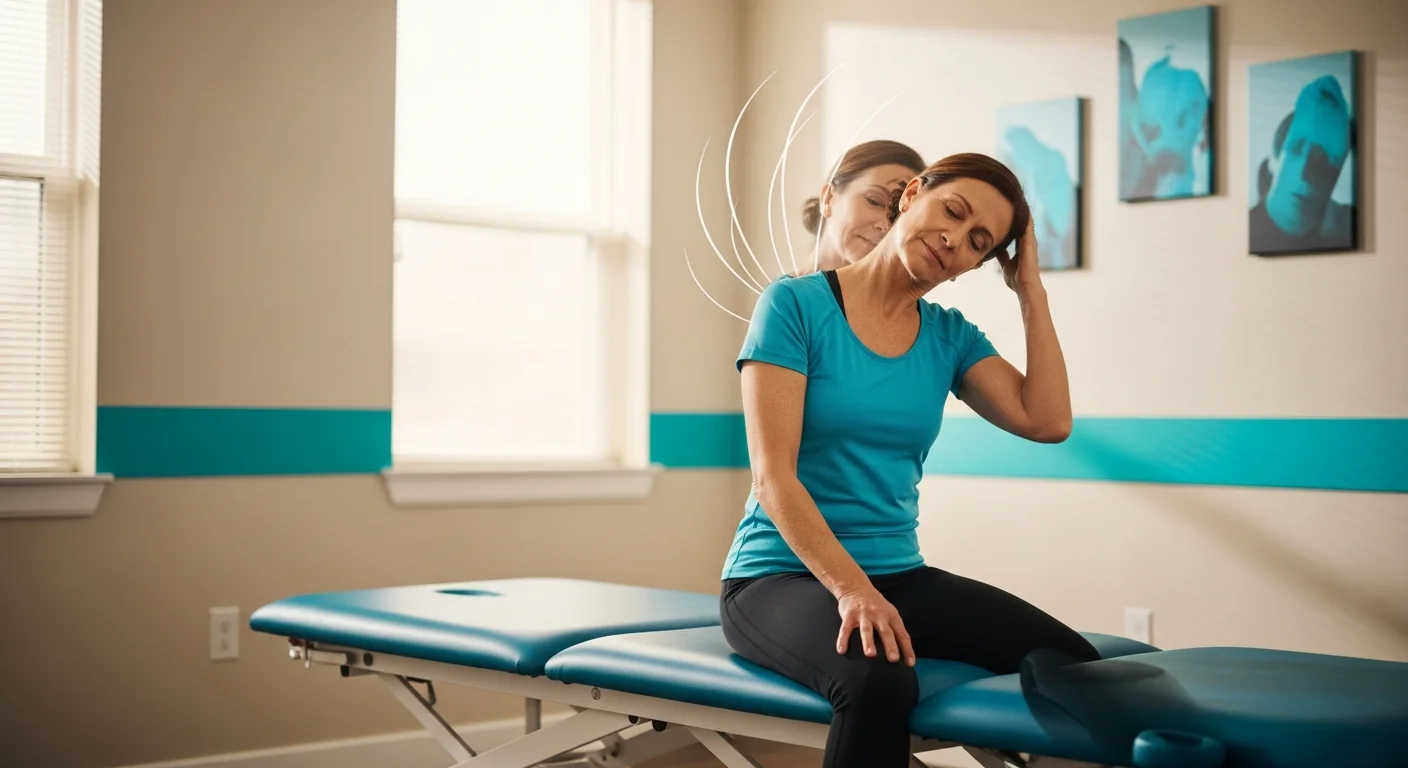
VOR with Cervical Range of Motion
Combine VOR x1 gaze stabilization with progressive cervical range of motion. Begin with small-amplitude head turns and gradually increase the range as tolerated. Alternate between horizontal and vertical planes. This exercise specifically targets the proprioceptive-vestibular mismatch that causes cervicogenic dizziness.
Combined VOR and Neck Stabilization
Perform VOR x1 exercises while gently engaging your deep neck flexor muscles to maintain cervical stability. Progress to performing the exercise while standing on an unstable surface (folded towel or foam pad). This advanced exercise retrains the full sensorimotor integration pathway: cervical proprioception, vestibular input, and visual processing working together.
Expected Recovery Timeline
Week 1: Getting Started
Start with slow VOR x1 exercises within your pain-free cervical range. Focus on smooth, controlled head movements. Coordinate with your neck physical therapy program if you have one. Expect mild dizziness during exercises—this is appropriate challenge.
Weeks 2-4: Building Progress
Progressively increase cervical range of motion during VOR exercises as neck mobility improves. Introduce the intermediate VOR with cervical ROM exercise. Many patients notice reduced provocation of dizziness during daily head movements by week 3.
Months 2-3: Consolidation
Progress to the combined VOR and neck stabilization exercise. Integrate exercises into functional movements like turning to check blind spots while driving or scanning aisles while shopping. Most patients achieve substantial improvement within 8-12 weeks when VOR exercises are combined with cervical manual therapy.
Tips for Success
- Combine VOR exercises with your cervical spine physical therapy program for the best results—they address complementary aspects of the problem
- Stay within your pain-free range of motion—neck pain during exercises can reinforce the dysfunctional patterns you are trying to correct
- Maintain good posture during exercises, keeping your chin slightly tucked to engage the deep neck stabilizers
- Perform exercises at a workstation-appropriate height to mimic real-world scenarios that provoke your dizziness
- Keep a symptom diary to track which neck positions and movements trigger dizziness, so you can target them progressively
When to Seek Help
- If VOR exercises consistently increase neck pain rather than dizziness—this may indicate the cervical component needs to be addressed first
- If you experience arm numbness, tingling, or weakness during head movements
- If dizziness is accompanied by severe headache, visual disturbances, or difficulty speaking
- If symptoms worsen progressively over weeks despite consistent exercise and cervical treatment
Frequently Asked Questions
Can VOR exercises alone treat cervicogenic dizziness?
How do I know if my dizziness is cervicogenic versus vestibular?
Should I stop VOR exercises if they cause neck pain?
How long until VOR exercises improve my cervicogenic dizziness?
Related Exercise Guides
Balance Exercises for Cervicogenic
Restore proprioceptive accuracy and sensory integration from the neck
Gaze Stabilization for Cervicogenic
Retrain the disrupted eye-neck coordination that causes cervical-related dizziness
VOR Exercises for BPPV
Gaze stabilization exercises to eliminate residual dizziness after BPPV treatment
Start Your Recovery Today
Get personalized vor exercises with video guidance, progress tracking, and daily reminders.