Gaze Stabilization for Cervicogenic Dizziness
Retrain the disrupted eye-neck coordination that causes cervical-related dizziness
Why Gaze Stabilization Works for Cervicogenic
Cervicogenic dizziness arises when abnormal sensory signals from the cervical spine interfere with the brain's balance processing. The neck contains proprioceptors that work closely with the vestibular and visual systems to coordinate gaze stability during movement. When neck dysfunction distorts these signals, the brain receives conflicting information, producing dizziness and visual instability. Gaze stabilization exercises retrain the eye-neck coordination loop, helping the brain correctly integrate cervical proprioceptive input with visual and vestibular signals.
The Science
Studies in Manual Therapy and the Journal of Orthopaedic & Sports Physical Therapy demonstrate that gaze stabilization combined with cervical proprioceptive training significantly improves outcomes in cervicogenic dizziness. Research shows that patients receiving eye-neck coordination exercises achieve greater and faster reduction in dizziness compared to those receiving cervical manual therapy alone. The exercises restore the cervico-ocular reflex and improve joint position sense, addressing the root sensorimotor mismatch.
Exercise Protocol
Smooth Pursuit with Neck Neutral
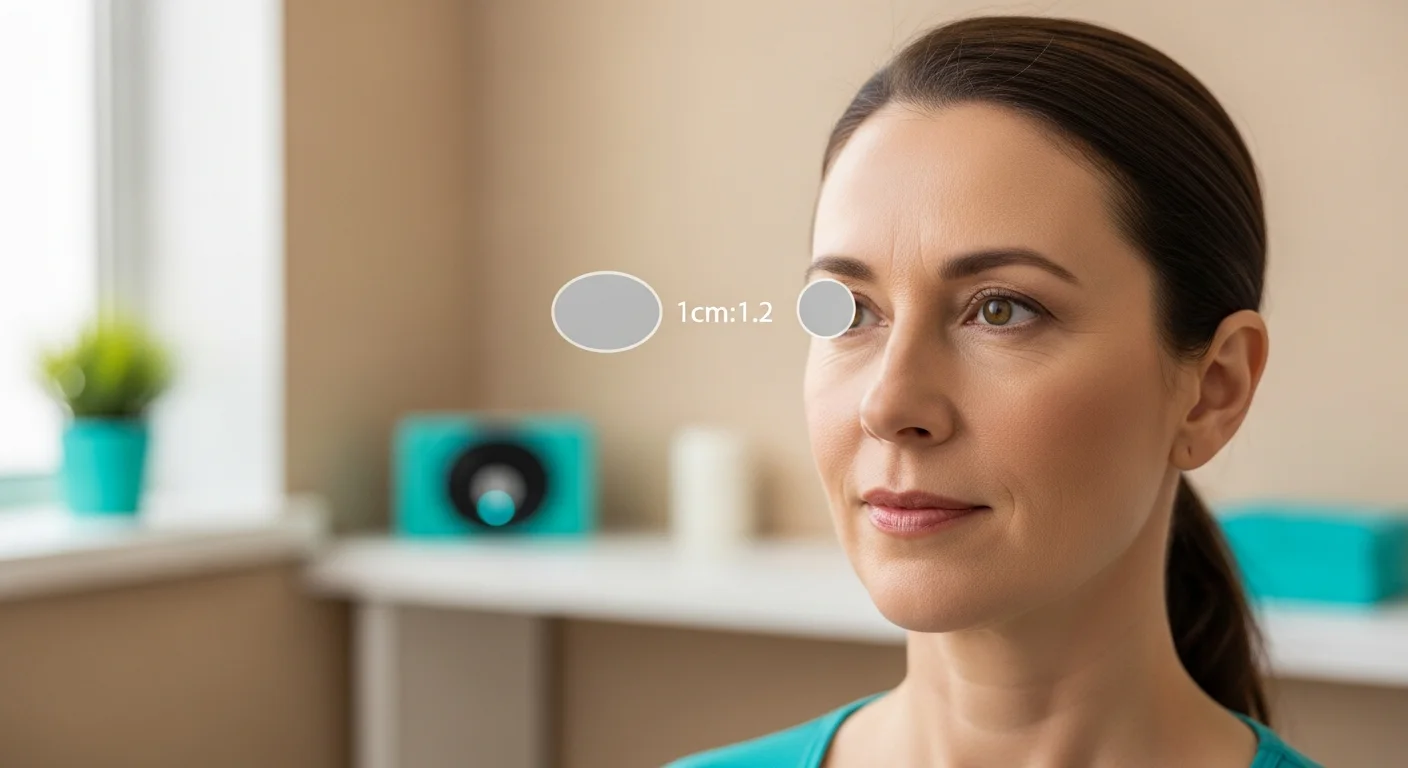
Sit with optimal neck posture (chin slightly tucked, spine aligned). Hold a target at arm's length and track it smoothly through horizontal and vertical arcs using only your eyes. The neck remains completely still in a comfortable neutral position. This isolates visual tracking from cervical movement, establishing a baseline of smooth, accurate eye control.
Eye-Head Coordination Drills
Fix your gaze on a stationary target. Slowly turn your head 15-20 degrees to one side while keeping the target in focus. Then move your eyes to look in the direction your head turned, hold briefly, and return both to center. This trains the eyes and neck to work together smoothly. Practice in both directions, then vertical. Speed and range increase as tolerance allows.
Gaze Fixation During Cervical Rotation
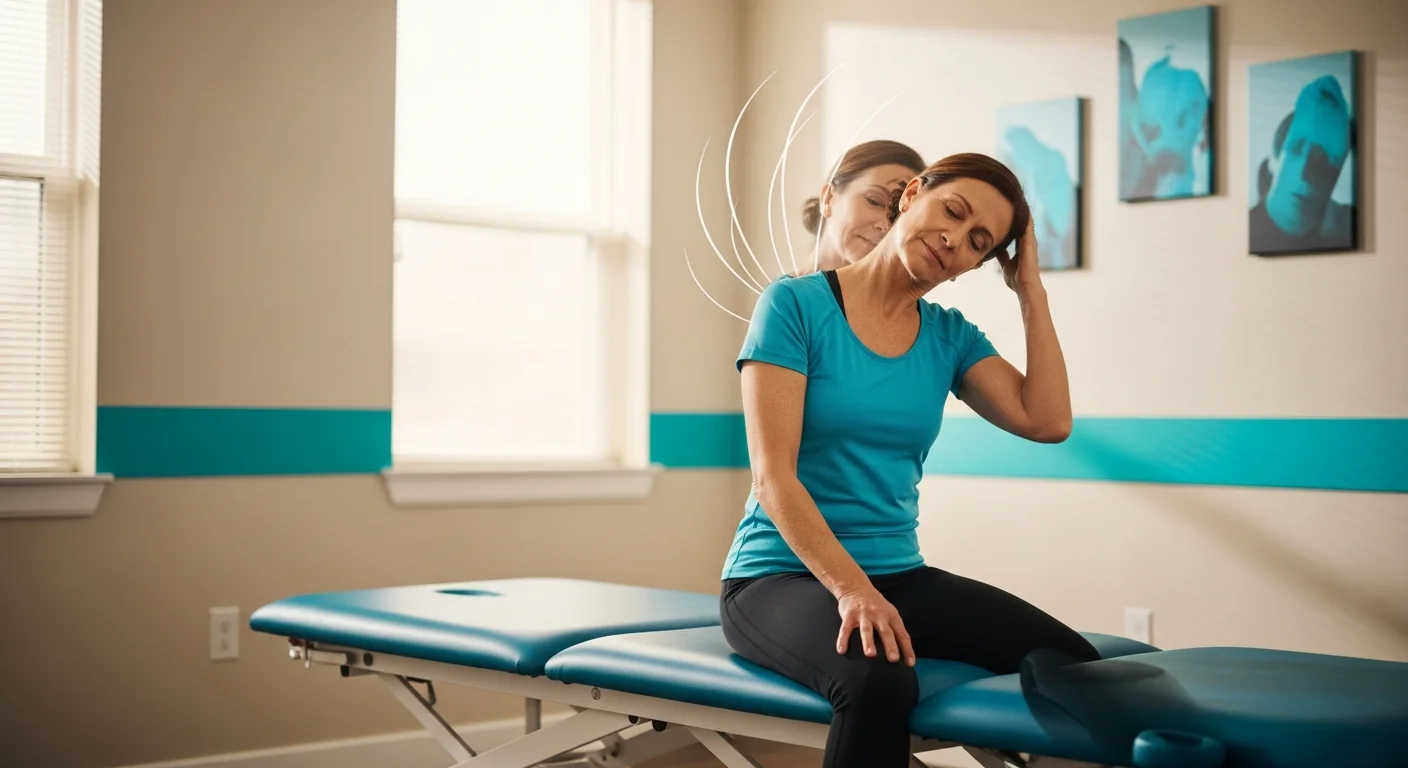
Focus on a stationary target at eye level. Slowly rotate your head left and right through a comfortable range, keeping the target perfectly clear throughout. Start with very small rotations (10-15 degrees) and increase gradually. This directly retrains the cervico-ocular reflex, the eye stabilization mechanism that is disrupted in cervicogenic dizziness.
Functional Gaze with Neck Movements
Practice maintaining clear gaze during everyday neck movements: slowly check over your shoulder while keeping a distant target in focus, look up at a shelf while maintaining visual clarity, or walk while gently turning your head side to side. These real-world scenarios train the eye-neck coordination system in contexts that typically provoke cervicogenic dizziness.
Expected Recovery Timeline
Week 1: Getting Started
Begin with smooth pursuit exercises in neck neutral position. Keep sessions short and gentle. If you have active neck pain, ensure it is being treated concurrently. Note which neck positions provoke the most dizziness.
Weeks 2-4: Building Progress
Add eye-head coordination drills and gaze fixation during cervical rotation. Gradually increase the range and speed of neck movements during exercises. Most patients notice meaningful improvement in daily symptoms by weeks 3-4.
Months 2-3: Consolidation
Progress to functional gaze tasks with real-world neck movements. Combine gaze exercises with cervical strengthening and posture correction for optimal results. Full resolution of cervicogenic dizziness typically requires 8-12 weeks of comprehensive treatment.
Tips for Success
- Address underlying neck issues concurrently — gaze exercises work best alongside manual therapy and cervical strengthening
- Maintain good posture during all exercises; poor neck alignment can worsen both dizziness and exercise effectiveness
- Start with very small neck movements and increase range gradually — never push into pain
- If you work at a desk, take micro-breaks every 30 minutes to perform brief gaze-neck coordination exercises
- Avoid prolonged static neck positions (phone use, reading in bed) that can exacerbate cervicogenic symptoms
When to Seek Help
- Sharp neck pain, numbness, or tingling in the arms during exercises — this may indicate nerve compression
- Dizziness or visual symptoms triggered by specific neck positions that do not improve over 3-4 weeks
- New or worsening headaches, especially at the base of the skull
- Any sudden loss of balance, coordination, or change in speech during neck movements — seek immediate evaluation
Frequently Asked Questions
How do I know my dizziness is coming from my neck?
Why do gaze exercises help with neck-related dizziness?
Should I combine gaze exercises with neck physiotherapy?
Can poor posture alone cause cervicogenic dizziness?
Related Exercise Guides
VOR Exercises for Cervicogenic
Retrain the eye-head coordination pathway disrupted by cervical spine dysfunction
Balance Exercises for Cervicogenic
Restore proprioceptive accuracy and sensory integration from the neck
Gaze Stabilization for Post-Concussion
Visual exercises to reduce motion sensitivity and improve focus
Start Your Recovery Today
Get personalized gaze stabilization with video guidance, progress tracking, and daily reminders.