Gaze Stabilization for Post-Concussion Syndrome
Visual exercises to reduce motion sensitivity and improve focus
Why Gaze Stabilization Works for Post-Concussion
Concussions often disrupt the brain's visual processing, causing difficulty tracking objects, maintaining focus during movement, and processing visual motion. Gaze stabilization exercises retrain these systems through targeted practice, reducing visual symptoms and improving functional vision.
The Science
Research shows that 60-80% of concussion patients have visual/vestibular dysfunction. Studies demonstrate that gaze stabilization training significantly improves visual symptoms and accelerates return to activities. A 2019 study found that visual-vestibular rehabilitation reduced symptoms by 50% within 8 weeks.
Exercise Protocol
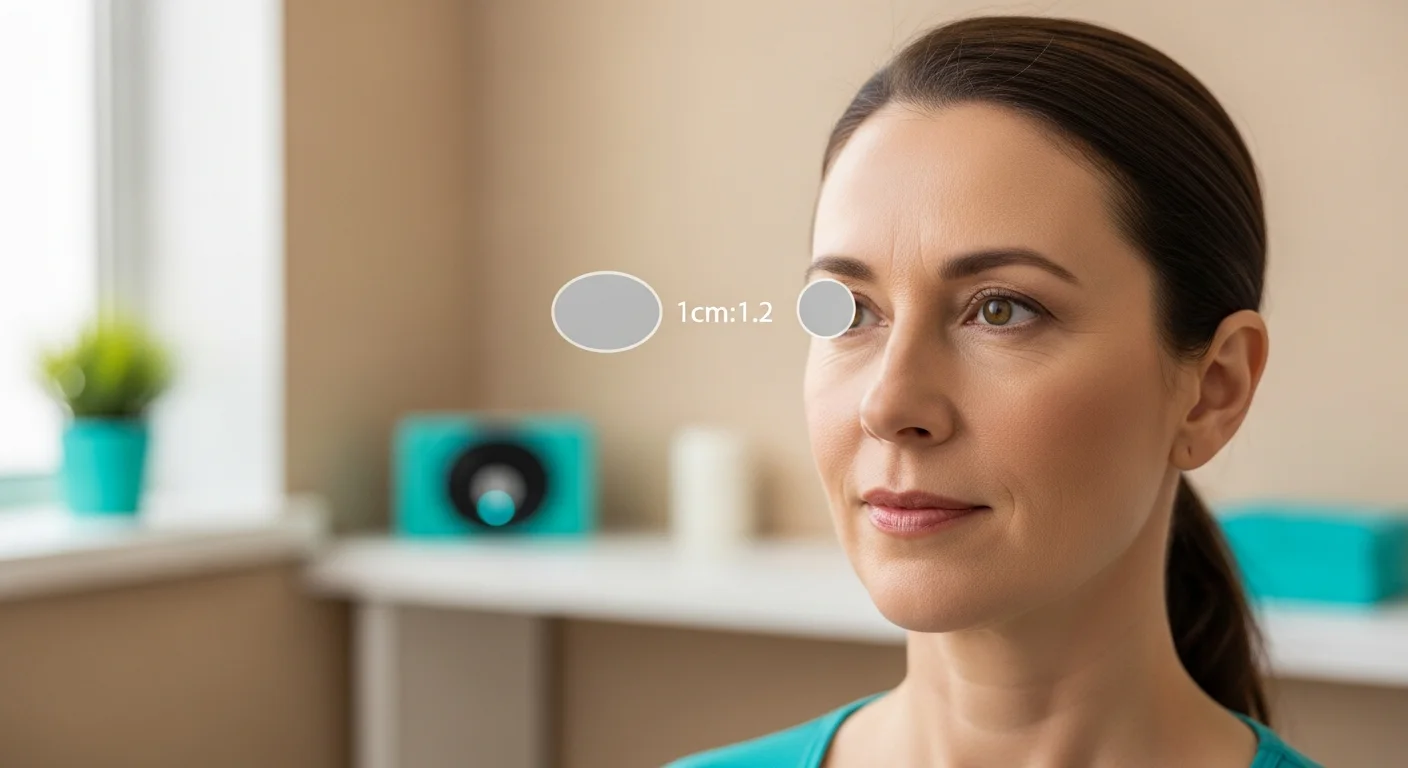
Smooth Pursuit Training
Slowly move a target horizontally while tracking it with your eyes (head still). Progress to vertical and circular movements. Focus on smooth, accurate tracking. On Face ID iPhones the app measures smoothness score, saccade count, and head stillness automatically via the TrueDepth camera.
Saccade Training
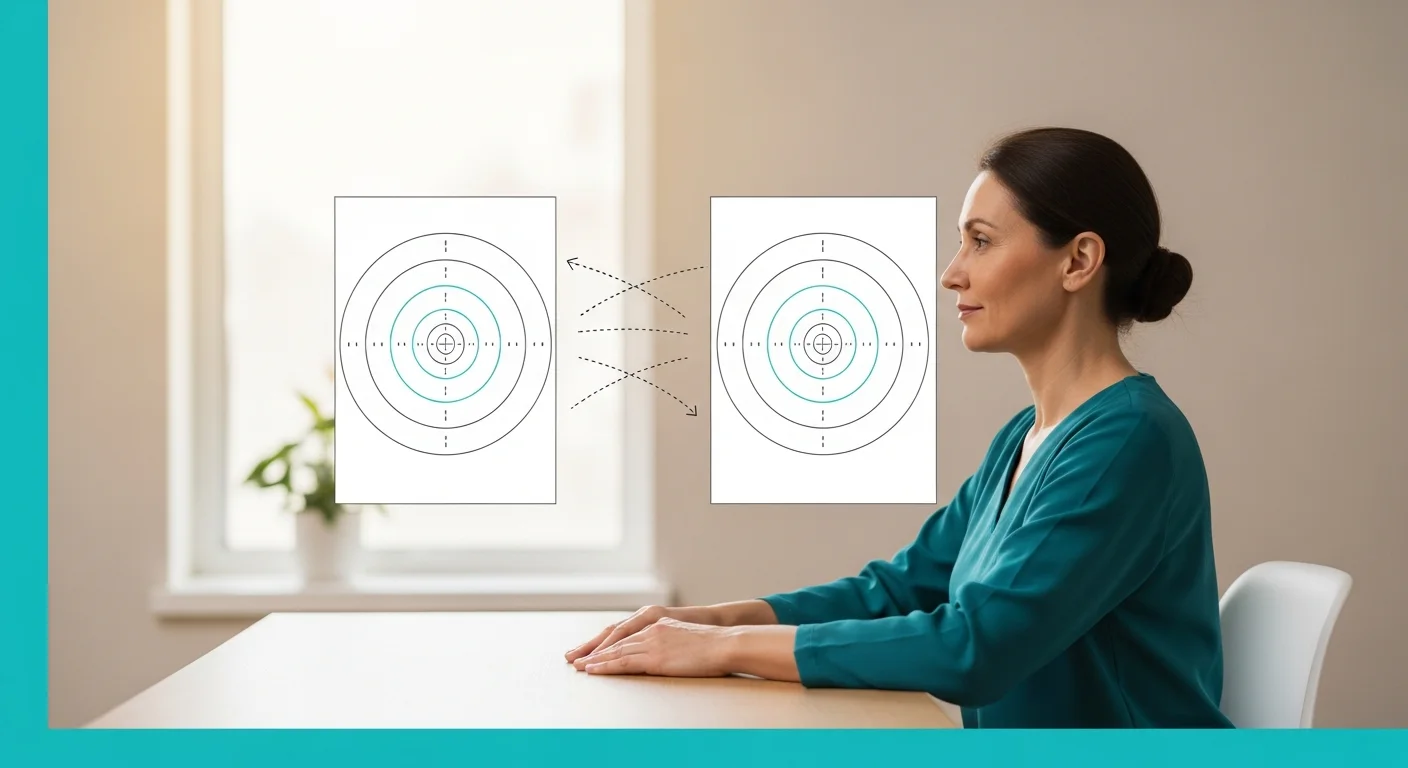
Place two targets at arm's length. Quickly shift gaze between them without moving your head. Practice horizontal, vertical, and diagonal shifts.
Near-Far Focus
Alternate focus between a near target (arm's length) and a far target (across the room). This trains accommodation—the eye's focusing system.

Convergence Training
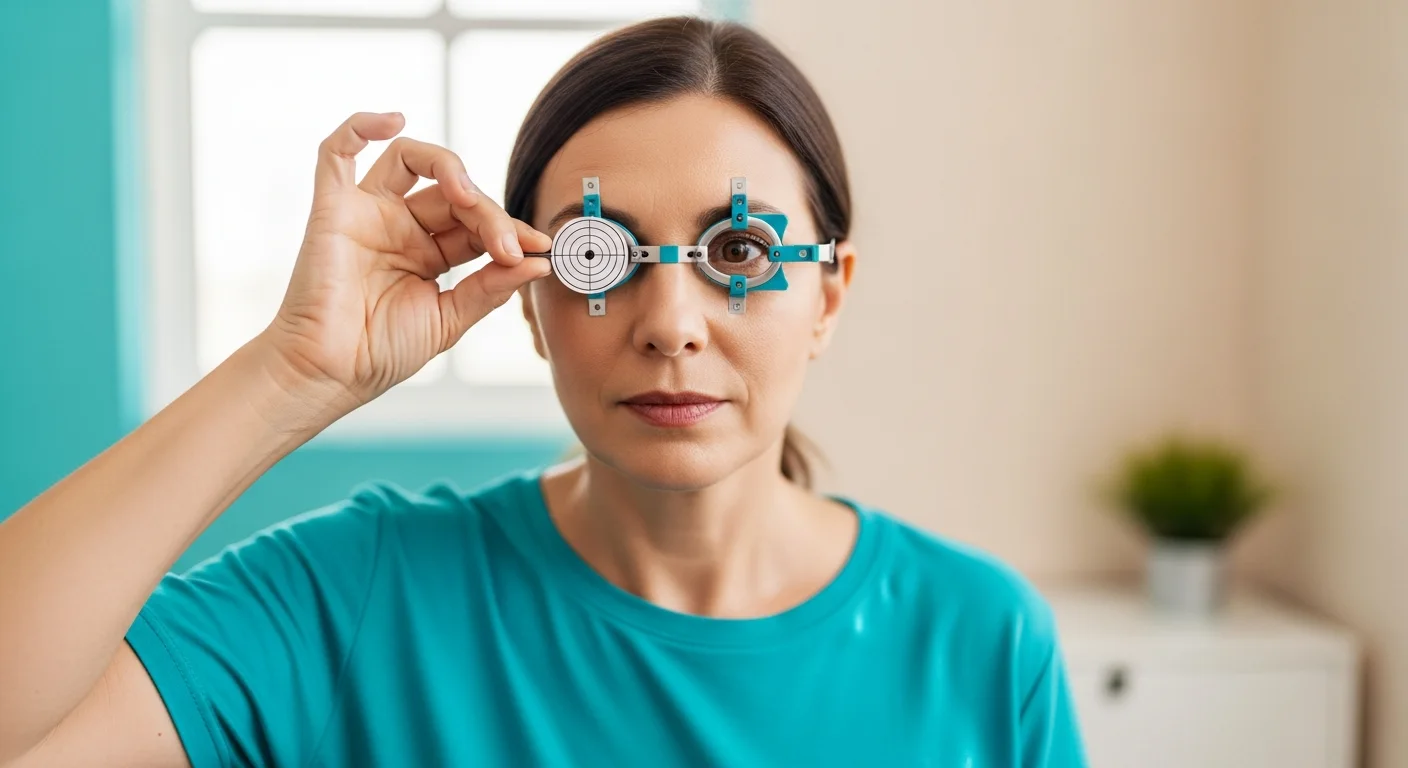
Slowly bring a target toward your nose while keeping it in focus. Stop when you see double. Practice until you can focus closer. Critical for reading tolerance.
Expected Recovery Timeline
Week 1: Getting Started
Start with basic smooth pursuit and saccade exercises. Keep sessions short if they trigger symptoms. Track which visual activities are most provoking.
Weeks 2-4: Building Progress
Add convergence and near-far training. Gradually increase duration and complexity. Combine with VOR exercises for comprehensive visual-vestibular rehabilitation.
Months 2-3: Consolidation
Progress to functional visual challenges (reading, screens, busy environments). Most patients see significant improvement in visual symptoms.
Tips for Success
- Remove glasses/contacts for some exercises if tolerated (trains focusing muscles)
- Use a target with letters or details to ensure accurate focus
- Practice in good lighting initially, progress to varied lighting
- Combine with vestibular exercises for comprehensive recovery
- Don't push through severe symptoms—moderate challenge is optimal
When to Seek Help
- Severe eye pain or persistent headache after exercises
- Double vision that doesn't resolve after stopping
- Significantly worsening symptoms over time
- New visual symptoms not previously present
Frequently Asked Questions
Why is my vision blurry after a concussion?
How long until visual symptoms improve after concussion?
Should I see an eye doctor after a concussion?
Can I do these exercises if I wear glasses?
Related Exercise Guides
VOR Exercises for Post-Concussion
Proven gaze stabilization exercises for persistent post-concussion dizziness
Balance Exercises for Post-Concussion
Progressive balance training for safe return to activities
Habituation for Post-Concussion
Systematic desensitization for motion and visual sensitivities
Start Your Recovery Today
Get personalized gaze stabilization with video guidance, progress tracking, and daily reminders.