Habituation Exercises for Vestibular Migraine
Desensitize your brain to motion and visual triggers between migraine attacks
Why Habituation Works for Vestibular Migraine
Vestibular migraine rewires your brain to become hypersensitive to motion and visual stimulation. Patients often develop visual vertigo, where scrolling screens, busy patterns, and crowded environments provoke dizziness even between attacks. Habituation exercises systematically expose you to these triggers at controlled intensities, gradually raising your tolerance threshold. By desensitizing the overactive neural pathways, you can reclaim daily activities that migraine stole from you.
The Science
Research from the Journal of Neurology demonstrates that vestibular rehabilitation incorporating habituation reduces dizziness handicap scores by 40-60% in vestibular migraine patients. A 2019 Cochrane review confirmed that graded exposure to provoking stimuli is effective for reducing visual vertigo and motion sensitivity. The exercises promote central adaptation by recalibrating the vestibular-visual integration pathways that become dysregulated in vestibular migraine.
Exercise Protocol
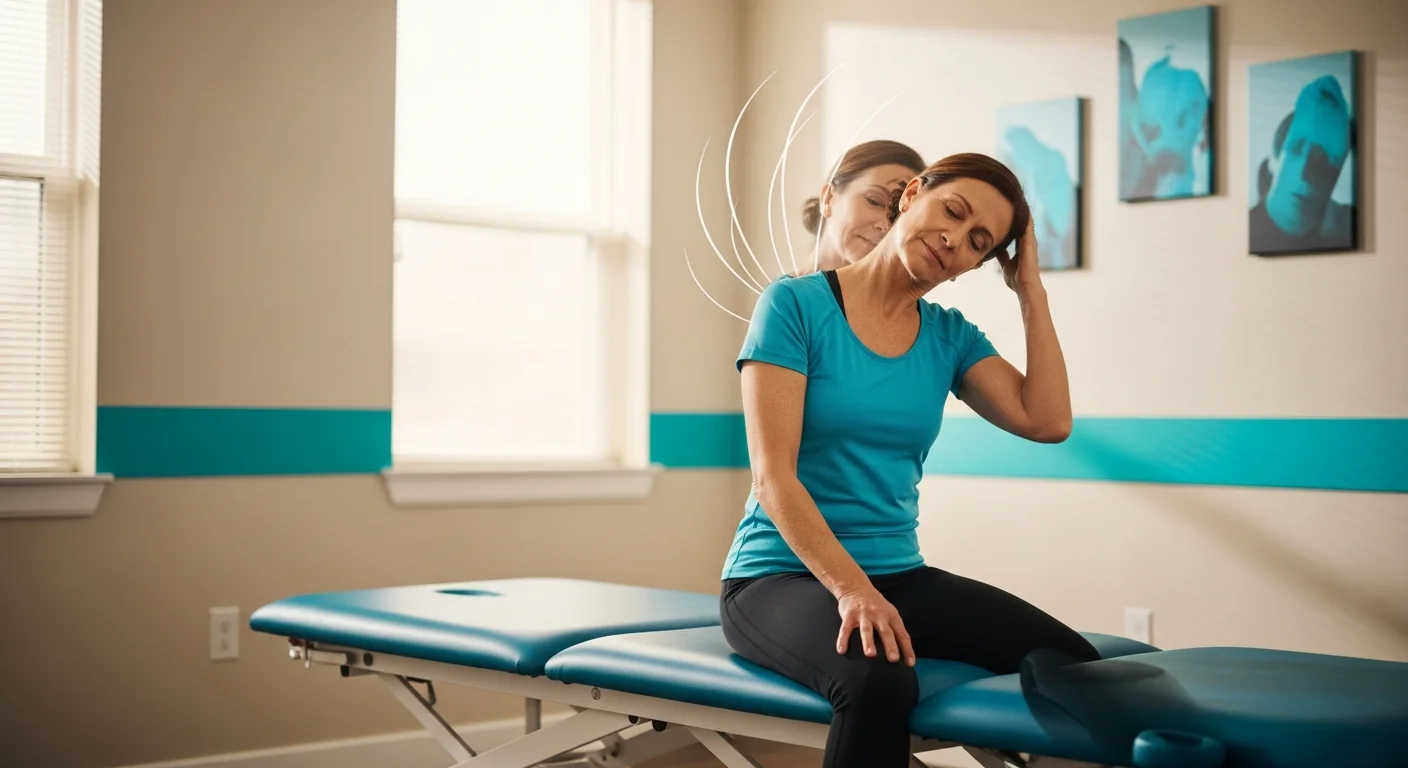
Gentle Head Movements
Sit comfortably and slowly turn your head left and right for 30 seconds, then up and down for 30 seconds. Rest until any provoked symptoms settle. The pace should be slow enough to provoke mild discomfort without triggering a migraine. Gradually increase speed over sessions.
Visual Motion Tolerance
View scrolling content on a screen (a slowly scrolling web page or gentle panning video). Start at 1-2 minutes and increase by 30 seconds each session as tolerance builds. If symptoms rise above mild (3-4/10), pause and look at a fixed point until they settle.
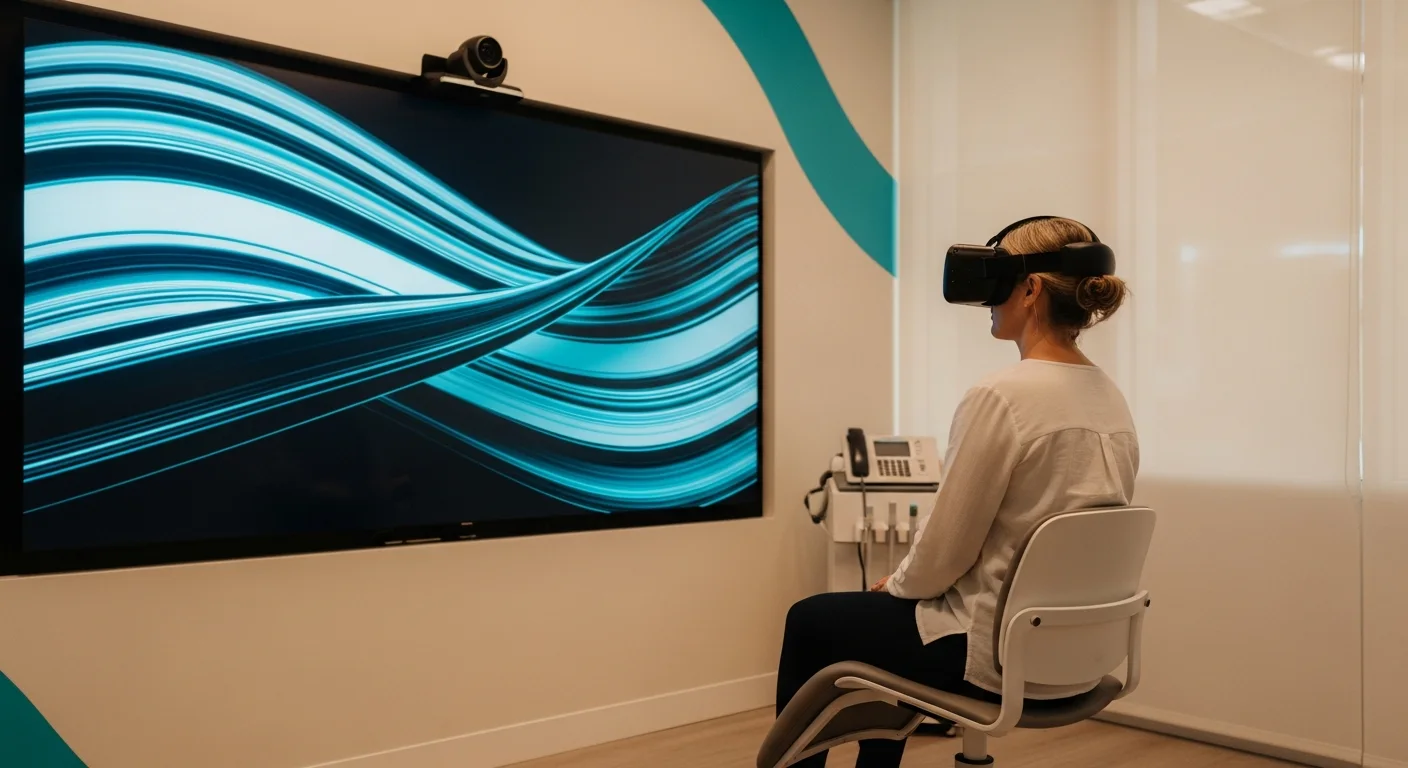
Optokinetic Exposure
Watch an optokinetic stimulus video (alternating black and white stripes moving horizontally). Start with 30 seconds and rest. This directly challenges the visual-vestibular pathways that are hypersensitive in vestibular migraine. Increase duration by 15-30 seconds per session.
Busy Environment Exposure
Visit a moderately busy environment such as a grocery store or shopping mall. Walk at a comfortable pace while looking at shelves, signs, and passing people. Start with 5-10 minute visits during off-peak hours and gradually increase duration and visual complexity. Have a companion with you for the first few sessions.

Expected Recovery Timeline
Week 1: Getting Started
Begin with gentle head movements only. Identify your specific visual and motion triggers by keeping a symptom diary. Practice during symptom-free or low-symptom periods only. Avoid habituation exercises within 24 hours of a migraine attack.
Weeks 2-4: Building Progress
Introduce visual motion tolerance and optokinetic exercises. Gradually increase duration and intensity. Most patients begin to notice reduced sensitivity to screens and busy visual environments by week 3-4. Continue tracking symptom levels to guide progression.
Months 2-3: Consolidation
Add busy environment exposure. By 6-8 weeks, most patients achieve meaningful improvement in daily functioning. Continue maintenance exercises 3-4 times per week to sustain gains. Combine with migraine preventive strategies for best long-term outcomes.
Tips for Success
- Always practice during interictal periods (between attacks)—never during or immediately after a migraine
- Keep stimulus intensity low enough to provoke mild symptoms (2-3/10) without triggering a full migraine
- Combine habituation with your migraine preventive medication for optimal results
- Use blue-light filtering and reduced screen brightness when starting visual motion exercises
- Track both exercise tolerance and migraine frequency—successful habituation often reduces attack frequency too
When to Seek Help
- Stop immediately if you feel a migraine aura or the onset of a migraine attack
- If exercises consistently trigger full migraine episodes, reduce intensity or consult your neurologist
- If dizziness persists for more than one hour after stopping exercises, you may be progressing too quickly
- Seek medical attention if you develop new neurological symptoms such as vision changes, numbness, or speech difficulty
Frequently Asked Questions
Can habituation exercises trigger a vestibular migraine attack?
Should I do habituation exercises during a migraine attack?
Why do screens and busy stores make my vestibular migraine worse?
How long until habituation helps my vestibular migraine?
Related Exercise Guides
VOR Exercises for Vestibular Migraine
Managing migraine-related dizziness with targeted gaze stabilization
Balance Exercises for Vestibular Migraine
Improve stability and reduce vulnerability between migraine attacks
Gaze Stabilization for Vestibular Migraine
Gentle eye-tracking exercises to reduce visual vertigo and motion sensitivity between attacks
Start Your Recovery Today
Get personalized habituation with video guidance, progress tracking, and daily reminders.