A Vestibular Clinic Workflow: From Assessment to Home-Program Review
A practical handoff checklist for clinic teams: connect the clinician's plan, home-session records and the next review without confusing activity with recovery.
EyeRehab Team
Published on June 15, 2026 · Updated on September 9, 2026
Listen to this article
Natural Language Narration · 6 min
Quick answer
How can a clinic connect assessment, home exercises and the next review?
Keep four things distinct: the clinician's plan, the sessions recorded, the patient's reported symptoms and the clinician's interpretation. Assign a reviewer and a next review date. EyeRehab supports assigned home programs, completion history and symptom trends; those records do not independently prove correct technique, recovery or treatment effectiveness.
A patient account is not a working home program. A completed session is not a clinical conclusion. A dashboard is not a review until somebody uses it.
EyeRehab began with a specific gap: founder iLyas Bakouch wanted more structure between weekly PT visits during his 18-month concussion recovery. That experience explains the product’s focus. It does not establish that another patient’s recovery will follow the same course.
For a clinic evaluating the software, the useful question is concrete: can the person responsible for the next visit see what was assigned, what was recorded and what still needs discussing?
This is a clinic-operations checklist, not a treatment protocol. It does not specify which assessment, exercise, dose or progression is appropriate. Those decisions remain with the treating clinician.
1. Keep the plan separate from the activity record
The clinician’s plan describes what the patient is being asked to do. The activity record describes what the software recorded. Neither should silently stand in for the other.
EyeRehab’s Pro Portal supports clinician-assigned home programs. Its patient app guides exercises and records completed sessions and symptom ratings before and after sessions. The clinician can review completion history and symptom trends.
Before a clinic tests that flow, identify the program being demonstrated and where the reviewer will find its records. Use a demo patient for software training; do not expose a real patient’s information in a sales walkthrough.
2. Give each handoff an owner and a visible check
The following is a proposed evaluation worksheet, not a report of a clinic’s results or an automated feature in EyeRehab. A team can use it in its own approved work system.
| Handoff | What to check | What the check does not prove |
|---|---|---|
| Clinician to patient | The patient can locate the assigned program | That an exercise is appropriate without clinical assessment |
| Patient app to review | A completed session appears in the expected record | That every movement was performed correctly |
| Record to reviewer | A named clinician can find the completion history and symptom trends | That the clinician has already interpreted them |
| Review to next visit | The team records its next review date and responsible person | That an appointment happened or care improved |
This keeps setup problems visible. If the patient cannot find a program, more reminders will not answer that problem. If a record exists but nobody owns the review, collecting another week of data does not resolve the handoff.
3. Read missing records as missing information
An empty activity history does not tell you why it is empty. The patient may not have started, may have used a different process, or may have encountered a setup problem. These are possibilities to check, not conclusions to assign to the patient.
Likewise, a symptom rating is the patient’s report. It is useful context, but it is not a diagnosis or an objective measure of exercise technique. A lower score after one session is not proof that the software caused improvement.
EyeRehab also offers motion-sensor information. Keep its scope distinct from self-reported symptoms and from the clinician’s assessment; do not present a sensor record as independent proof of diagnosis, correct exercise execution or readiness to progress.
4. Make the next review explicit
A practical software evaluation needs an agreed review point. Write down who will look at the records, when they will do it and how questions about setup will reach the right person.
Illustrative software-test example, using no real patient data: a clinic demonstrates an assigned program on a demo account, locates a recorded session and identifies where symptom trends appear. The clinician then notes what information would be useful for a real follow-up. That proves the demonstrated software path was visible. It does not establish patient activation, clinical benefit or a successful pilot.
For a real evaluation, keep workflow observations separate from clinical decisions. “The record was available” and “the clinician found it useful” answer different questions. Neither is a claim that treatment worked.
A small evaluation with a clear stopping point
The founder-guided clinic pilot covers three appropriate patients over 30 days, with no card or platform fee during the pilot. Patient selection and care remain the clinic’s responsibility.
The operating test is to set up the workflow together, review its use weekly and make a keep, change or stop decision at day 30. Questions worth recording include:
- Could the patient and clinician use the assigned-program flow?
- Could the reviewer find the completed-session record and symptom trends?
- Was the information useful enough to bring into the next conversation?
- What setup or review work still fell outside the tool?
Those are evaluation questions, not promised results. EyeRehab’s published outcomes and limitations describe a separate observational, self-reported analysis without a control group. It should not be used to predict an individual patient’s response or to claim that this workflow saves appointments.
What changed in this article
Updated September 9, 2026 with AI-assisted editorial support. This revision replaces the earlier “one visit instead of two” framing with a handoff worksheet. It removes promises about avoided appointments, automatic charting and improved clinic capacity that were not established by the evidence presented here.
This is product and operational information, not a clinically reviewed treatment guide. It makes no claim that assessment and treatment must happen in the same visit.
Tags
Written by
EyeRehab Team
Product and workflow notes from EyeRehab. Not clinical guidance.
Related Articles
Find a Provider: 735 Clinic Listings Now in Eye Rehab
Browse 735 clinic listings in Eye Rehab. Search by clinic name or city, filter by specialty, and learn what happens when you send a connection request.
Ilyas Bakouch, Founder of Eye Rehab
September 5, 2026

EMR Outbox: Stop Charting Vestibular Care Twice
Eye Rehab's new EMR Outbox turns completed assessments, clinic visits, discharge reports, and RTM month closes into chart-ready notes and PDFs you file into Jane, WebPT, or any EMR - so the work you already did in Eye Rehab stops becoming a second round of typing.
EyeRehab - VOR Training Team
July 6, 2026
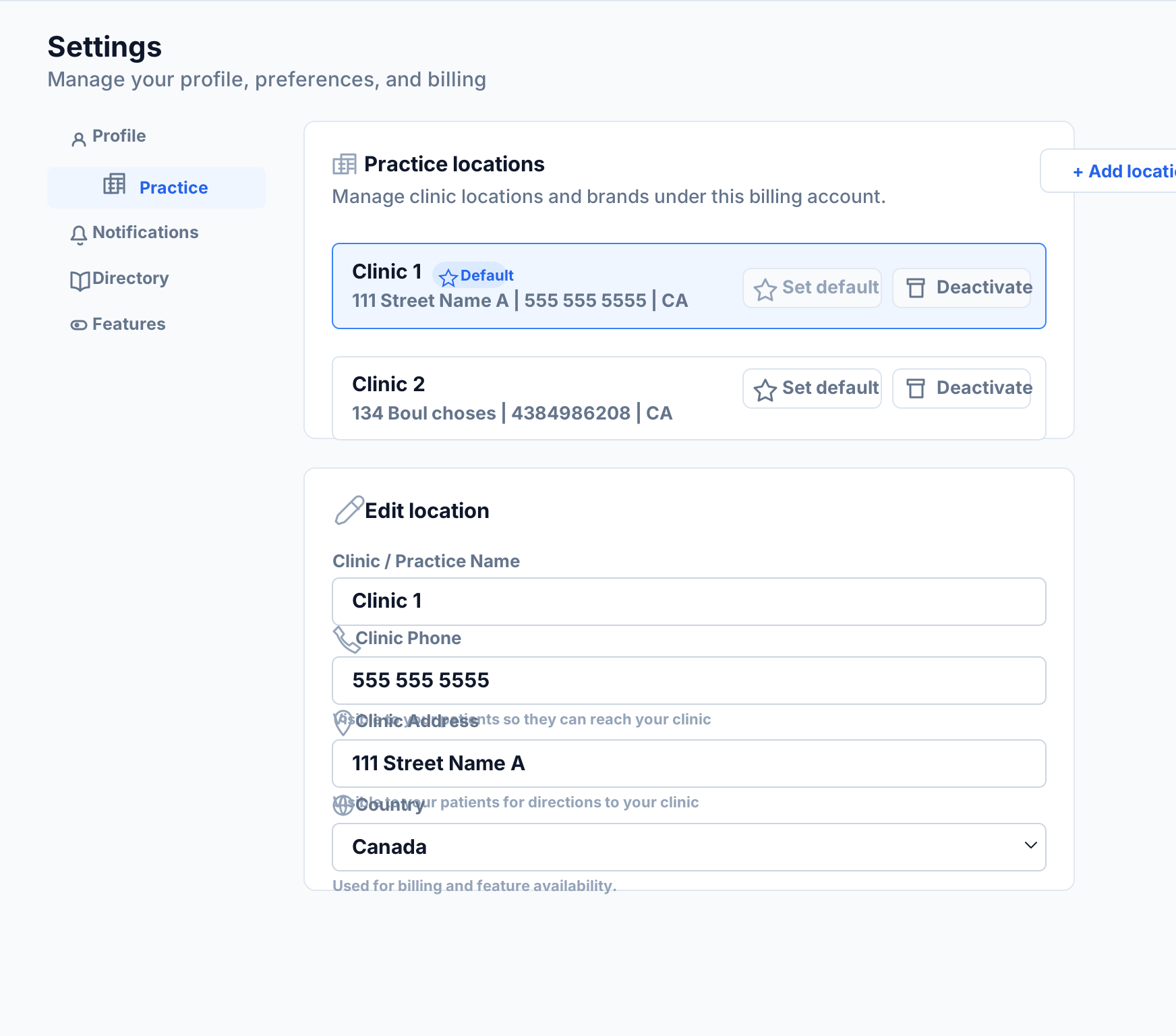
New in Pro Portal: Multiple Practice Locations Under One Billing Account
VOR Eye Rehab Pro now lets clinics manage multiple locations or brands from one account, assign each patient to the right practice, and keep reports tied to the correct clinic identity.
VOR Eye Rehab Team
June 7, 2026