Saccade Exercises for Reading After Concussion
A practical guide to saccade exercises for reading strain after concussion, including setup, pacing, and progression.
EyeRehab - VOR Training Team
Published on June 5, 2026
Listen to this article
Natural Language Narration · 8 min
Quick answer
Can saccade exercises help with reading difficulties after a concussion?
Yes, saccade exercises can help improve reading ability after a concussion. Reading requires rapid, accurate eye movements called saccades that jump from word to word. Concussion can disrupt the neural pathways controlling these movements, causing eyes to overshoot or undershoot target words, leading to eye strain, headaches, and fatigue. Saccade exercises retrain these neural pathways to restore accuracy and control. Consult a healthcare provider before starting, and stop immediately if severe dizziness, nausea, or sharp eye pain occurs.
Reviewed on June 5, 2026
Overcoming Reading Difficulties After a Brain Injury
Struggling to read after a concussion is a highly common and frustrating symptom. Whether you are experiencing blurred vision, dizziness, or headaches when looking at a page, these visual disturbances often stem from a disruption in your eye’s ability to move accurately from word to word. Incorporating targeted saccade exercises into your recovery routine can help restore the rapid eye movements required for reading, visual scanning, and daily functioning.
What Are Saccade Exercises?
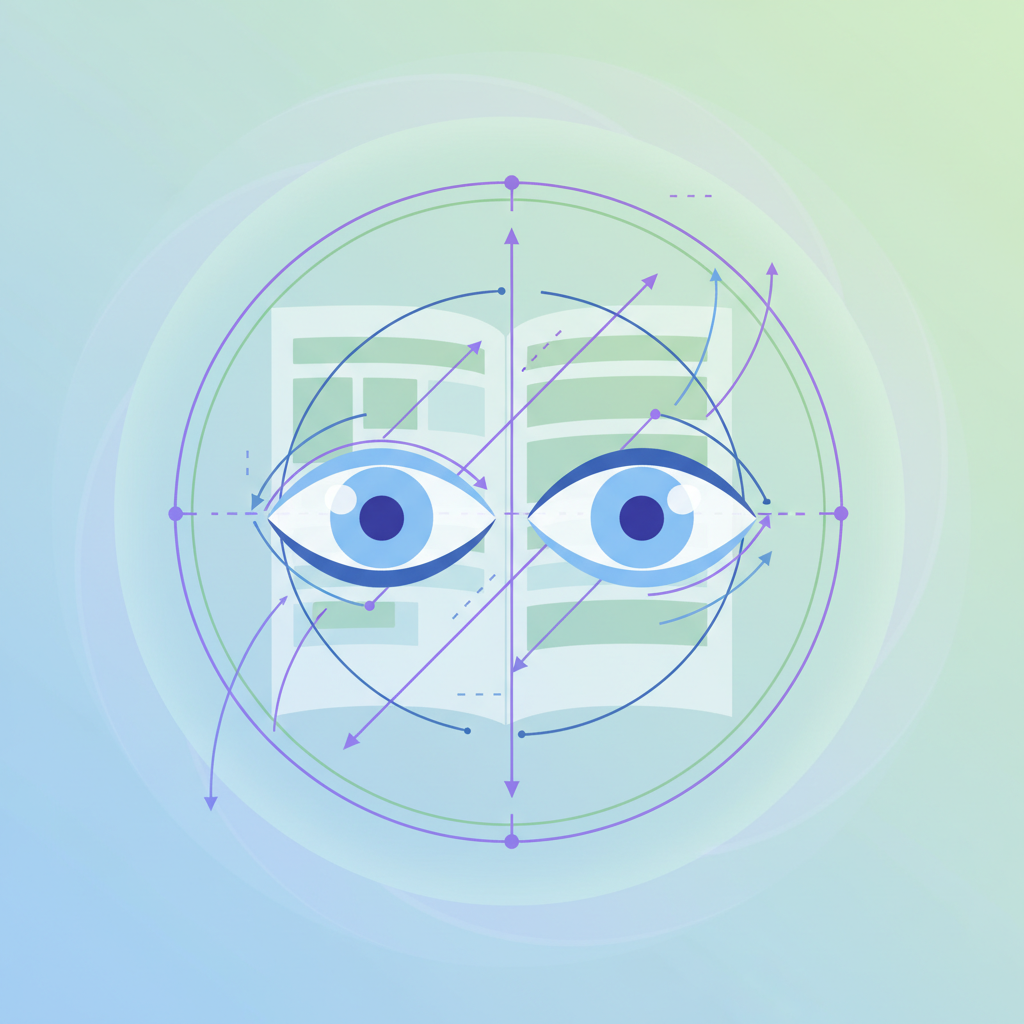
Saccade exercises are a form of neuro-optometric and vestibular rehabilitation designed to improve the speed, accuracy, and control of rapid eye movements. Saccades are the quick, simultaneous jumps your eyes make to shift focus from one object to another. Unlike smooth pursuits, where your eyes track a moving target, saccades require your brain to instantly calculate the distance to a new target and program the eye muscles to “jump” there accurately. In a clinical setting, eye saccade training is used to help patients regain visual stability and cognitive focus following a neurological event.
Can Saccade Exercises Help Reading After Concussion?
Yes, saccade exercises can directly improve reading ability after a concussion. Reading is a complex cognitive task that relies heavily on continuous, microscopic saccadic eye movements. When you read a sentence, your eyes do not glide smoothly across the page; they make several rapid jumps (saccades) and briefly pause (fixations) to process the words.
According to the CDC, visual problems and cognitive difficulties—such as struggling to concentrate or process information—are common concussion symptoms. If the neural pathways controlling these rapid eye movements are disrupted by a mild traumatic brain injury (mTBI), your eyes may overshoot or undershoot the targeted words. This forces your brain to work overtime to correct the errors, leading to eye strain, brain fog, and headaches. Rapid eye movement exercises specifically target and retrain these neural pathways, improving reading endurance and reducing visual fatigue.
How to Perform Basic Saccade Exercises
Before beginning any saccade exercises for concussion, it is essential to consult with a healthcare provider, such as a physical therapist or vestibular specialist, to ensure these exercises are appropriate for your specific presentation.
Here is a foundational horizontal saccade drill you can try at home:
Setup
- Seated Position: Sit upright in a chair with your feet flat on the floor in a well-lit room.
- Targets: Place two distinct targets (such as two different colored sticky notes or playing cards) on a blank wall in front of you.
- Spacing: Position the targets about 12 to 18 inches apart, exactly at your eye level.
- Distance: Sit approximately an arm’s length away from the wall.
Steps
- Keep your head completely still throughout the exercise. You may rest your chin on your fists to prevent accidental head movement.
- Look directly at the target on your left. Ensure it is in sharp focus.
- As quickly and accurately as possible, shift your gaze to the target on the right.
- Focus on the right target until the image is clear. Do not attempt to read the target; just look at it.
- Jump your eyes back to the left target and refocus.
- Repeat this back-and-forth motion for 30 to 60 seconds.
How Should Saccade Drills Be Progressed?
To ensure continuous neural adaptation, saccadic eye movement therapy must be progressively challenged as your visual tolerance improves. According to clinical guidelines for concussion recovery, gradually exposing the brain to visual and vestibular stimuli is key to safe rehabilitation.
Here is how healthcare professionals typically progress these drills:
- Directional Changes: Once horizontal movements are symptom-free, progress to vertical saccades (targets placed one above the other), and eventually diagonal and random visual patterns.
- Cognitive Loading: Combine eye saccade training with cognitive tasks. Instead of simply looking at a blank target, use letters or numbers. Call out the letter you are looking at with each eye jump to engage your brain’s processing centers.
- Postural Changes: Move from a seated position to a standing position. This introduces a balance component, requiring your brain to manage postural stability while simultaneously performing rapid eye movement exercises.
- Dynamic Environments: Progress to performing the exercises while walking or standing on an unstable surface (like a foam pad).
- The VOR Cancellation Method: Try moving your head and eyes in the same direction at the same speed to target a stationary object, which challenges the vestibular-ocular reflex (VOR) and saccadic coordination.
Common Mistakes During Saccadic Eye Movement Therapy
To get the most out of your vision training, avoid these common pitfalls:
- Moving the Head: The primary goal is to isolate eye movement. If your neck moves, your vestibular system takes over the visual scanning, defeating the purpose of the eye exercise.
- Moving Too Fast to Focus: Speed should not come at the cost of accuracy. If your eyes consistently overshoot the target (missing the mark), slow down your jumps until you can land on the target precisely every time.
- Holding Your Breath: People often unconsciously hold their breath during intense concentration or when anticipating dizziness. Remember to breathe naturally to avoid triggering tension headaches.
- Pushing Through Severe Symptoms: A mild, temporary increase in symptoms is normal as the brain adapts. However, if you experience severe dizziness, nausea, or sharp eye pain, stop immediately.
Tips for a Safe and Effective Recovery
Navigating concussion recovery requires patience and careful symptom management. Keep these tips in mind:
- Track Your Symptoms Daily: Use a journal or a digital app to monitor symptoms like dizziness, headache, brain fog, eye strain, and nausea before and after your exercises.
- Respect Your Limits: Pacing is critical. Shorter, more frequent exercise sessions are often more effective than one long session that leaves you exhausted for the rest of the day.
- Know When to Seek Help: If your reading difficulties do not improve, or if you experience worsening vestibular symptoms, consult your healthcare team. You may require specialized evaluation for conditions like Binocular Vision Dysfunction (BVD) or an undiagnosed vestibular disorder like vestibular neuritis.
Key Takeaways
- Saccades are essential for reading: These rapid eye movements allow your eyes to jump accurately from word to word.
- Concussions disrupt visual accuracy: Damage to neural pathways can cause saccades to become jittery or inaccurate, resulting in reading fatigue and headaches.
- Exercise progression is necessary: Recovery requires moving from basic, seated horizontal eye jumps to cognitively and physically demanding tasks like standing balance and cognitive dual-tasking.
- Symptom tracking is vital: Mild symptom flares are normal, but exercises should be stopped if they cause severe nausea or pain.
Take the Next Step in Your Recovery
If you are ready to regain your visual focus and get back to reading comfortably, guided digital therapy can help. The EyeRehab - VOR Training app provides step-by-step saccade exercises for concussion, along with smooth pursuit, convergence, and balance training. With built-in symptom tracking and automatic difficulty progression, you can safely manage your vestibular recovery right from your phone. Download EyeRehab today to take control of your healing journey.
Disclaimer: This blog post is for educational purposes only and does not constitute medical advice. Always consult with a qualified healthcare professional or vestibular specialist before beginning any new exercise regimen, especially after a head injury or if you are experiencing neurological symptoms.
Frequently Asked Questions
What are saccade exercises?
Saccade exercises are neuro-optometric and vestibular rehabilitation exercises that improve the speed, accuracy, and control of rapid eye movements. They train the brain to calculate distances and program eye muscles to jump precisely between targets, unlike smooth pursuit exercises that track moving objects.
How should saccade drills be progressed safely?
Progress saccade drills gradually: start with horizontal movements, then advance to vertical and diagonal patterns. Add cognitive tasks like reading letters, change from seated to standing positions, and eventually perform exercises on unstable surfaces. Only progress when current levels are symptom-free. Always follow your healthcare provider's guidance.
When should I see a specialist for post-concussion reading problems?
Consult a healthcare provider if reading difficulties persist or worsen despite exercises, or if you experience severe dizziness, nausea, or sharp eye pain. You may need evaluation for conditions like Binocular Vision Dysfunction (BVD) or vestibular disorders. A vestibular specialist or neuro-optometrist can provide tailored treatment.
Tags
Written by
EyeRehab - VOR Training Team
Expert insights on vestibular rehabilitation and eye health.
Related Articles
Convergence Insufficiency After Concussion
Understand convergence insufficiency after concussion and how convergence exercises fit into vision rehab.
EyeRehab - VOR Training Team
June 5, 2026

Smooth Pursuit Eye Exercises for Dizziness
Learn smooth pursuit eye exercises for dizziness and post-concussion visual tracking symptoms.
EyeRehab - VOR Training Team
June 5, 2026

Convergence Exercises at Home: Step-by-Step Training Guide
Learn convergence exercises to treat convergence insufficiency at home. Includes step-by-step instructions, progressions, and expected recovery timeline.
EyeRehab - VOR Training Team
May 27, 2026