Convergence Insufficiency After Concussion
Understand convergence insufficiency after concussion and how convergence exercises fit into vision rehab.
EyeRehab - VOR Training Team
Published on June 5, 2026
Listen to this article
Natural Language Narration · 12 min
Quick answer
What is convergence insufficiency after concussion?
Understand convergence insufficiency after concussion and how convergence exercises fit into vision rehab.
Reviewed on June 5, 2026
Understanding Convergence Insufficiency After Concussion
Experiencing blurry vision, headaches, or eye strain when reading or looking at screens is a highly common—and deeply frustrating—part of recovering from a head injury. These symptoms often point to a treatable visual deficit, and targeted convergence exercises are often the most effective way to regain visual comfort. Whether you are an athlete working toward return-to-play, an older adult managing balance issues, or simply trying to get back to your daily routine, understanding how your eyes focus is a critical step in your concussion recovery.
What is Convergence Insufficiency After Concussion?
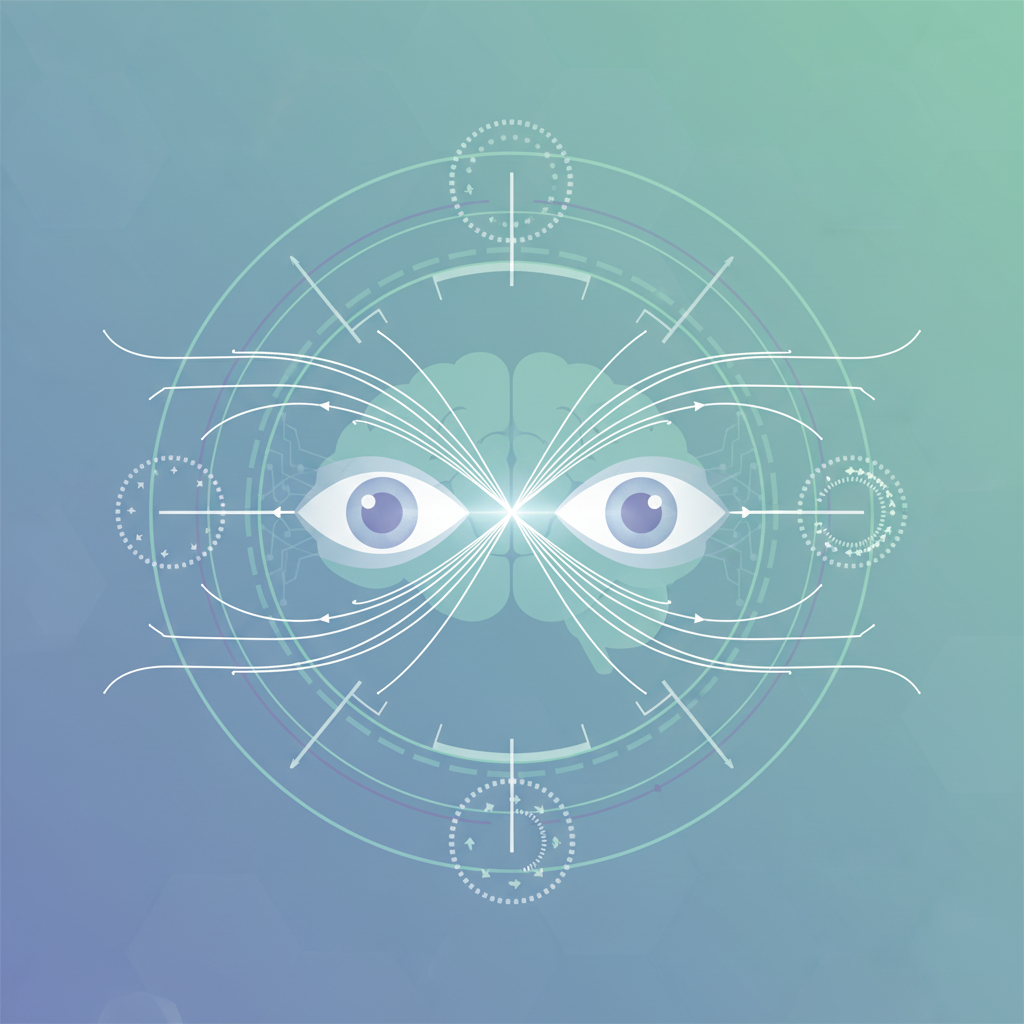
Convergence insufficiency after a concussion is a binocular vision dysfunction where the eyes struggle to work together to focus on a near object.
Under normal circumstances, your brain coordinates the extraocular muscles to turn both eyes slightly inward (converge) when looking at something up close, maintaining a single, clear image. A concussion or traumatic brain injury (TBI) can disrupt the neural pathways responsible for this precise coordination. As a result, the eyes do not turn inward adequately, causing a breakdown in near-point vision.
According to the Centers for Disease Control and Prevention (CDC), visual problems are a primary symptom of concussions. When convergence insufficiency occurs, the visual system has to work overtime to compensate, leading to a cluster of disruptive symptoms.
Common symptoms of convergence insufficiency include:
- Eye strain or fatigue, particularly during reading or screen time
- Headaches around the forehead or temples
- Blurred or double vision (diplopia) when looking at near objects
- Words appearing to move, float, or run together on a page
- Difficulty maintaining concentration (often described as brain fog)
- Motion sensitivity or mild dizziness
When Should Near-Point Convergence Be Assessed?
Near-point convergence should be assessed as soon as a patient reports visual discomfort, difficulty reading, or persistent headaches following a head injury.
Vision is often overlooked during the initial acute stages of concussion evaluation, where the primary focus is on ruling out severe structural brain injury. However, clinical guidelines—such as those from the Ontario Neurotrauma Foundation—emphasize that vestibular and visual dysfunctions should be systematically assessed when symptoms persist beyond the first few days.
If you are experiencing any of the following scenarios, an assessment for near-point convergence is warranted:
- Persistent Post-Concussion Symptoms: If headaches, brain fog, or visual fatigue do not resolve within 7 to 10 days after the injury.
- Return to Learn or Work Difficulties: If you or your child are struggling to return to reading, computer work, or classroom settings due to visual overload.
- Vestibular and Balance Issues: Because the visual and vestibular systems are deeply connected, visual deficits can mimic or exacerbate dizziness and balance problems.
- Athletes Returning to Sport: Visual tracking is essential for athletic performance. Athletes should be cleared by a vestibular specialist or physical therapist who has evaluated their near-point convergence and oculomotor function.
Effective Convergence Exercises for Visual Recovery
Which exercises improve convergence? Evidence-based convergence exercises work by strengthening the eye’s ability to turn inward and maintain focus, utilizing the principles of neuroplasticity to retrain the brain-eye connection.
A foundational clinical trial known as the Convergence Insufficiency Treatment Trial (CITT) demonstrated that office-based vision therapy supplemented with home-based reinforcement is highly effective for treating this condition. Below is a breakdown of proven convergence insufficiency exercises that are often prescribed in vestibular and concussion rehabilitation.
1. Pencil Push-Ups for Eyes
Pencil push-ups for eyes are the most widely recognized foundational exercise for improving convergence. This near point convergence exercise trains the eyes to track a target moving closer to the face.
How to perform it:
- Sit in a comfortable position in a well-lit room.
- Hold a small target (like a pen, pencil, or a popsicle stick with a letter written on it) at arm’s length directly in front of your nose, at eye level.
- Focus both eyes on the target. You should see one clear image.
- Slowly move the target toward the tip of your nose, keeping your focus locked on the letter.
- Stop moving the target the moment you see double vision (two targets) or if the target becomes blurry.
- Hold the target at this “break point” for 5 to 10 seconds, actively trying to pull the two images into one.
- If you cannot fuse the image into one, move the target slightly back until it is single again, hold for a few seconds, and then extend your arm back to the starting position.
- Repeat this process for 10 to 15 repetitions.
2. Brock String Training
The Brock string is a classic vision therapy tool that provides excellent feedback for eye convergence training. It helps you understand how your eyes are working together.
How to perform it:
- Tie one end of a string to a stationary object at eye level (like a doorknob).
- Hold the other end of the string taut against the bridge of your nose, just between your eyebrows.
- Place three differently colored beads on the string. Start by placing one bead about 4 inches from your nose, one at 10 inches, and one at arm’s length.
- Focus on the nearest bead. When your eyes are properly converged on this bead, you should see one bead, with the string forming an “X” exactly at the bead. The strings leading away from the bead should appear as two distinct lines.
- If you see the string crossing in front of or behind the bead, your eyes are over-converging or under-converging.
- Shift your focus to the middle bead, then the farthest bead, repeating the process.
- Practice shifting focus rapidly between the beads (jump convergence) for 5 to 10 minutes.
3. Smooth Pursuit and Saccadic Convergence Training
While pencil push-ups are a static exercise, dynamic eye convergence training involves moving the eyes while the head is moving (Vestibular-Ocular Reflex or VOR training).
How to perform it:
- Sit or stand in a balanced posture.
- Hold a target at arm’s length.
- Keep your head still and track the target as you slowly move it left and right (smooth pursuits).
- Next, hold two targets (one in your peripheral left vision, one in your right). Rapidly dart your eyes back and forth between the two targets (saccades).
- Progression: Once this is comfortable, introduce a moving target closer to your face while simultaneously nodding or shaking your head slowly. This forces the brain to coordinate head movement with near-point visual focusing.
How to Perform Near Point Convergence Exercises Safely
Because concussion recovery requires careful pacing, it is essential to approach eye convergence training strategically. Overworking the visual system can trigger symptom flare-ups.
Actionable tips for safe training:
- Follow the 20-20-20 Rule: During daily screen time, take a break every 20 minutes by looking at something 20 feet away for at least 20 seconds.
- Pacing is Key: Start with just 3 to 5 minutes of convergence exercises per day. If your symptoms do not spike the next day, you can gradually increase the duration.
- Track Your Symptoms: Use a symptom tracker to monitor how your eyes feel after exercising. A mild, temporary increase in eye strain is normal; severe headaches or dizziness are signs you need to reduce the intensity.
- Optimize Your Environment: Ensure you are performing these exercises in a well-lit room to reduce shadows and glare, which can further strain the eyes.
Integrating Convergence Exercises with Vestibular Therapy
Combining convergence exercises with vestibular therapy provides a comprehensive approach to post-concussion recovery.
Vision does not operate in a vacuum; it is intimately connected to your inner ear (vestibular system) and your muscles (proprioceptive system) to maintain balance and spatial orientation. When your visual system is compromised by convergence insufficiency, your brain places a heavier burden on the vestibular system, which can result in dizziness, instability, and a feeling of being “off-balance.”
By integrating eye convergence training with VOR x1 and x2 exercises, saccades, and balance training, you retrain the entire sensory network. As your near-point vision stabilizes, you will likely notice improvements in your static and dynamic balance, a reduction in motion sensitivity, and a decrease in general brain fog.
Red Flags: When to Consult a Healthcare Provider
While vision therapy exercises are highly beneficial, they should be performed under the guidance of a healthcare professional. You should stop your home exercises and consult a physical therapist, vestibular specialist, or neurologist if you experience:
- A sudden, severe increase in headaches or migraines
- Worsening double vision that does not resolve when you rest your eyes
- New or worsening dizziness, vertigo, or nausea that prevents you from functioning
- Sudden vision loss, flashes of light, or physical pain within the eye itself
A trained specialist can perform a comprehensive evaluation to determine if you need specialized corrective lenses, adjusted exercise protocols, or alternative therapeutic interventions.
Key Takeaways
- Convergence insufficiency is a common post-concussion condition where the eyes struggle to turn inward and focus on near objects, leading to headaches, blurred vision, and reading difficulties.
- Near-point convergence should be assessed as soon as visual symptoms, screen fatigue, or reading difficulties become apparent after a head injury.
- Foundational exercises, such as pencil push-ups for eyes and Brock string training, are proven methods for retraining the brain-eye connection and improving visual focus.
- Symptom pacing is critical. Start with short, manageable sessions and utilize symptom tracking to ensure you are not overexerting your visual system.
- Holistic recovery matters. Integrating eye exercises with vestibular and balance training provides the most robust path to recovery.
Start Your Recovery with EyeRehab - VOR Training
Taking control of your concussion or vestibular recovery requires the right tools. The EyeRehab - VOR Training app is designed specifically to guide you through evidence-based vestibular-ocular reflex training, balance exercises, and targeted convergence training from the comfort of your home. With built-in progress and symptom tracking, the app helps you safely scale your difficulty levels so you can return to the activities you love without overwhelming your visual system. Download EyeRehab today to take the next step in your recovery journey.
Medical Disclaimer
This content is for informational and educational purposes only and does not constitute medical advice, diagnosis, or treatment. Always seek the advice of your physician, physical therapist, or other qualified healthcare provider with any questions you may have regarding a medical condition or before starting any new exercise program. If you are experiencing a medical emergency, contact your doctor or emergency services immediately.
Frequently Asked Questions
What is convergence insufficiency after concussion?
Use symptom patterns, safety, and day-to-day function to decide the next step. Seek urgent care for danger signs, and ask a qualified clinician for guidance when symptoms are worsening, unsafe, unusual, or not improving.
Which exercises improve convergence?
Use symptom patterns, safety, and day-to-day function to decide the next step. Seek urgent care for danger signs, and ask a qualified clinician for guidance when symptoms are worsening, unsafe, unusual, or not improving.
When should near-point convergence be assessed?
Use symptom patterns, safety, and day-to-day function to decide the next step. Seek urgent care for danger signs, and ask a qualified clinician for guidance when symptoms are worsening, unsafe, unusual, or not improving.
Tags
Written by
EyeRehab - VOR Training Team
Expert insights on vestibular rehabilitation and eye health.
Related Articles
Saccade Exercises for Reading After Concussion
A practical guide to saccade exercises for reading strain after concussion, including setup, pacing, and progression.
EyeRehab - VOR Training Team
June 5, 2026

Smooth Pursuit Eye Exercises for Dizziness
Learn smooth pursuit eye exercises for dizziness and post-concussion visual tracking symptoms.
EyeRehab - VOR Training Team
June 5, 2026
Convergence Exercises at Home: Step-by-Step Training Guide
Learn convergence exercises to treat convergence insufficiency at home. Includes step-by-step instructions, progressions, and expected recovery timeline.
EyeRehab - VOR Training Team
May 27, 2026