Return to Sport After Concussion: Dizziness Checklist
A return-to-sport dizziness checklist for concussion recovery, linking symptoms, exertion, gaze stability, and balance.
EyeRehab - VOR Training Team
Published on June 5, 2026
Listen to this article
Natural Language Narration · 10 min
Quick answer
When can athletes return to sport after concussion?
A return-to-sport dizziness checklist for concussion recovery, linking symptoms, exertion, gaze stability, and balance.
Reviewed on June 5, 2026
Returning to the Game: Why Dizziness Matters
Returning to physical activity too quickly after a head injury can prolong symptoms and significantly increase the risk of re-injury. For athletes, a safe return to sport after concussion relies on a structured, step-by-step protocol that prioritizes full symptom resolution, especially when it comes to dizziness and balance. This guide outlines the essential vestibular checks athletes and healthcare providers need to complete before stepping back onto the field.
When Can Athletes Return to Sport After Concussion?
Athletes can safely return to sport after a concussion only when they are completely free of symptoms at rest, during cognitive exertion, and during progressive physical exertion. While sports concussion recovery time varies greatly depending on the individual and the specific injury, most athletes recover within a few weeks. However, returning to play requires completing a graduated exercise protocol under medical supervision.
According to established consensus statements, an athlete must spend a minimum of 24 hours at each step of the return-to-play progression. If any symptoms (such as dizziness, headache, or brain fog) reappear or worsen during a specific step, the athlete must drop back to the previous asymptomatic step and wait before trying to progress again.
What Dizziness Checks Matter Before Return to Play?
Before an athlete is cleared for game play, they must pass specific dizziness and balance checks. Dizziness during physical exertion is a primary indicator that the brain has not fully recovered from a concussion.
To ensure safety, the following vestibular and balance checks must be evaluated:
1. Resting Symptom Evaluation Before introducing physical movement, healthcare providers assess baseline symptoms. The athlete must report zero dizziness, headache, or visual strain at rest. Tracking these symptoms daily using a standardized checklist helps ensure the athlete is ready for physical exertion.
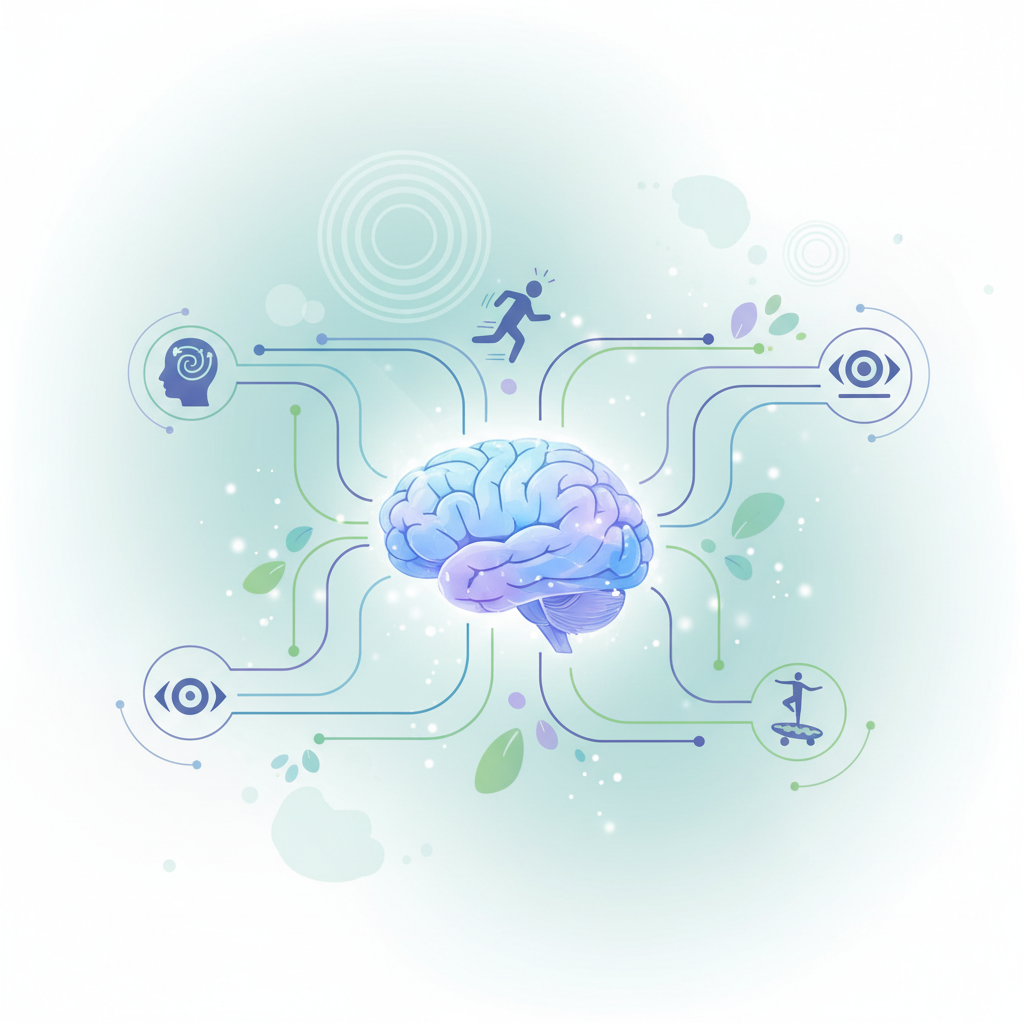
2. Vestibular-Ocular Reflex (VOR) Testing The VOR keeps vision stable while the head is moving. Athletes need a highly functioning VOR to track fast-moving objects while running. Providers will test this using:
- VOR x1 (Gaze Stabilization): The athlete focuses on a stationary target while rotating their head horizontally and vertically.
- VOR x2: The athlete focuses on a target while both their head and the target are moving in opposite directions. Any onset of dizziness, blurriness, or nausea during these tests indicates the vestibular system is not ready for dynamic sports.
3. Balance and Postural Control Balance deficits are heavily linked to dizziness and can persist even after an athlete feels “normal.” Evaluations should include:
- Static Balance: Maintaining stance on firm and soft surfaces (like foam) with eyes open and closed.
- Dynamic Balance: Walking with head turns, performing tandem walks (heel-to-toe), and maintaining balance while performing dual-task cognitive exercises.
4. Visual Motion Sensitivity Athletes must be evaluated for how they handle complex visual environments. Therapists often use optokinetic training (exposing the brain to moving visual stimuli) or assess symptom triggers in busy environments to ensure the brain can process rapid motion without triggering severe dizziness.
5. Exertional Provocation Testing A critical component of the athlete concussion recovery process is ensuring the vestibular system holds up under cardiovascular stress. Athletes are put through their paces—such as sprinting, jumping, and agility drills—to see if exertion triggers dizziness or visual instability.
How Does Vestibular Rehab Fit Sports Recovery?
Vestibular therapy for athletes is a specialized form of rehabilitation designed to retrain the brain’s ability to process spatial awareness, balance, and visual cues after a concussion. Rather than just waiting for symptoms to resolve with rest, vestibular rehab actively retrains the dysfunctional systems causing dizziness.
For athletes, vestibular rehab fits into sports recovery by directly addressing the root causes of prolonged dizziness. Treatment plans are highly targeted and often include:
- Gaze Stabilization Exercises: Using VOR x1 and VOR x2 exercises to improve visual clarity during rapid head movements, essential for reacting to plays on the field.
- Saccades and Smooth Pursuits: Training the eyes to jump quickly between targets and smoothly track moving objects without triggering dizziness.
- Convergence Training: Strengthening the eyes’ ability to work together to focus on near objects, which is often disrupted by head trauma.
- Habituation Exercises: Gradually exposing the athlete to movements or visual environments that make them dizzy (like optokinetic training or the Cawthorne-Cooksey exercises) to desensitize the brain’s overactive threat response.
By integrating vestibular therapy early into a recovery plan, athletes can safely accelerate their return to play while minimizing the risk of lingering chronic dizziness.
Step-by-Step Guide: Graduated Return to Sport After Concussion Protocol
A standard concussion protocol return to play is a stepwise process. There must be a minimum of 24 hours (and often longer) between each step.
Step 1: Symptom-Limited Activity The athlete begins with daily activities that do not provoke symptoms (e.g., gentle walking). The goal is a gradual reintroduction of work/school activities.
Step 2: Light Aerobic Exercise The athlete engages in light cardiovascular exercise, such as walking, swimming, or stationary cycling, keeping the intensity below 70% of their maximum heart rate. No resistance training is introduced yet.
Step 3: Sport-Specific Exercise The athlete progresses to running drills or skating, depending on their sport. The focus is on increasing the heart rate while adding movement complexity, but no head-impact activities are allowed.
Step 4: Non-Contact Training Drills The athlete participates in more complex training drills, such as passing and tactical exercises. At this stage, healthcare providers may begin evaluating the athlete’s VOR and dynamic balance to ensure they are tolerating cognitive and physical loads simultaneously.
Step 5: Full-Contact Practice Following medical clearance, the athlete participates in normal, full-contact team practice. This is the ultimate physical and vestibular test to ensure the brain can withstand the unpredictable dynamics of the sport.
Step 6: Return to Sport If the athlete remains completely symptom-free through full-contact practice, they are fully cleared to return to competitive game play.
Red Flags: When to Stop and Seek Immediate Care
During the recovery process, athletes and their support systems must be vigilant for severe neurological red flags. If any of the following symptoms occur, physical activity should be stopped immediately, and emergency medical attention is required:
- Severe or rapidly worsening headaches
- Repeated vomiting
- Slurred speech or worsening confusion
- Weakness, numbness, or tingling in the arms or legs
- Neck pain
- Loss of consciousness
- Increasingly erratic behavior or inability to wake up
Key Takeaways
- Dizziness is a primary roadblock: You cannot safely return to sport after a concussion if you experience dizziness at rest or during exertion.
- Vestibular checks are mandatory: Before returning to play, athletes must pass VOR testing, balance assessments, and exertional provocation tests to ensure visual and spatial stability.
- Recovery requires a stepwise approach: A safe concussion protocol return to play takes a minimum of six gradual steps, with at least 24 hours between each phase.
- Vestibular therapy accelerates recovery: Targeted exercises like saccades, smooth pursuits, and gaze stabilization actively retrain the brain, making vestibular therapy for athletes a crucial part of recovery.
Start Your Recovery with EyeRehab - VOR Training
Managing your concussion recovery requires precise tracking and targeted exercises. The EyeRehab - VOR Training app is designed to guide you through your vestibular recovery with clinically-backed exercises for gaze stabilization (VOR x1 and x2), saccades, smooth pursuits, and dynamic balance. With built-in symptom tracking for dizziness, brain fog, and eye strain, you and your healthcare provider can safely monitor your progress and confidently work toward returning to the sport you love. Download EyeRehab - VOR Training today to take control of your recovery journey.
Medical Disclaimer
This content is for informational and educational purposes only and does not constitute medical advice. Concussions and head injuries are serious medical conditions. Always consult with a qualified healthcare professional, such as a physician, physical therapist, or vestibular specialist, before starting any new exercise regimen, returning to physical activity, or making decisions regarding your health and treatment.
Frequently Asked Questions
When can athletes return to sport after concussion?
Use symptom patterns, safety, and day-to-day function to decide the next step. Seek urgent care for danger signs, and ask a qualified clinician for guidance when symptoms are worsening, unsafe, unusual, or not improving.
What dizziness checks matter before return to play?
Use symptom patterns, safety, and day-to-day function to decide the next step. Seek urgent care for danger signs, and ask a qualified clinician for guidance when symptoms are worsening, unsafe, unusual, or not improving.
How does vestibular rehab fit sports recovery?
Use symptom patterns, safety, and day-to-day function to decide the next step. Seek urgent care for danger signs, and ask a qualified clinician for guidance when symptoms are worsening, unsafe, unusual, or not improving.
Tags
Written by
EyeRehab - VOR Training Team
Expert insights on vestibular rehabilitation and eye health.
Related Articles
Concussion Symptoms Come Back With Exercise
Explain exercise-related concussion symptom flares, pacing rules, and when symptom return needs reassessment.
EyeRehab - VOR Training Team
July 6, 2026
Blurry Vision After Concussion: Exercises That Help
A practical guide to blurry vision after concussion, including common causes, exercise categories, and when to seek a focused exam.
EyeRehab - VOR Training Team
June 5, 2026
Brain Fog After Concussion and Visual Fatigue
Explore how visual fatigue can feed brain fog after concussion and how pacing, eye exercises, and load management can help.
EyeRehab - VOR Training Team
June 5, 2026