Brain Fog After Concussion and Visual Fatigue
Explore how visual fatigue can feed brain fog after concussion and how pacing, eye exercises, and load management can help.
EyeRehab - VOR Training Team
Published on June 5, 2026
Listen to this article
Natural Language Narration · 10 min
Quick answer
Can visual strain worsen brain fog after concussion?
Explore how visual fatigue can feed brain fog after concussion and how pacing, eye exercises, and load management can help.
Reviewed on June 5, 2026
Understanding Brain Fog After Concussion and Visual Fatigue
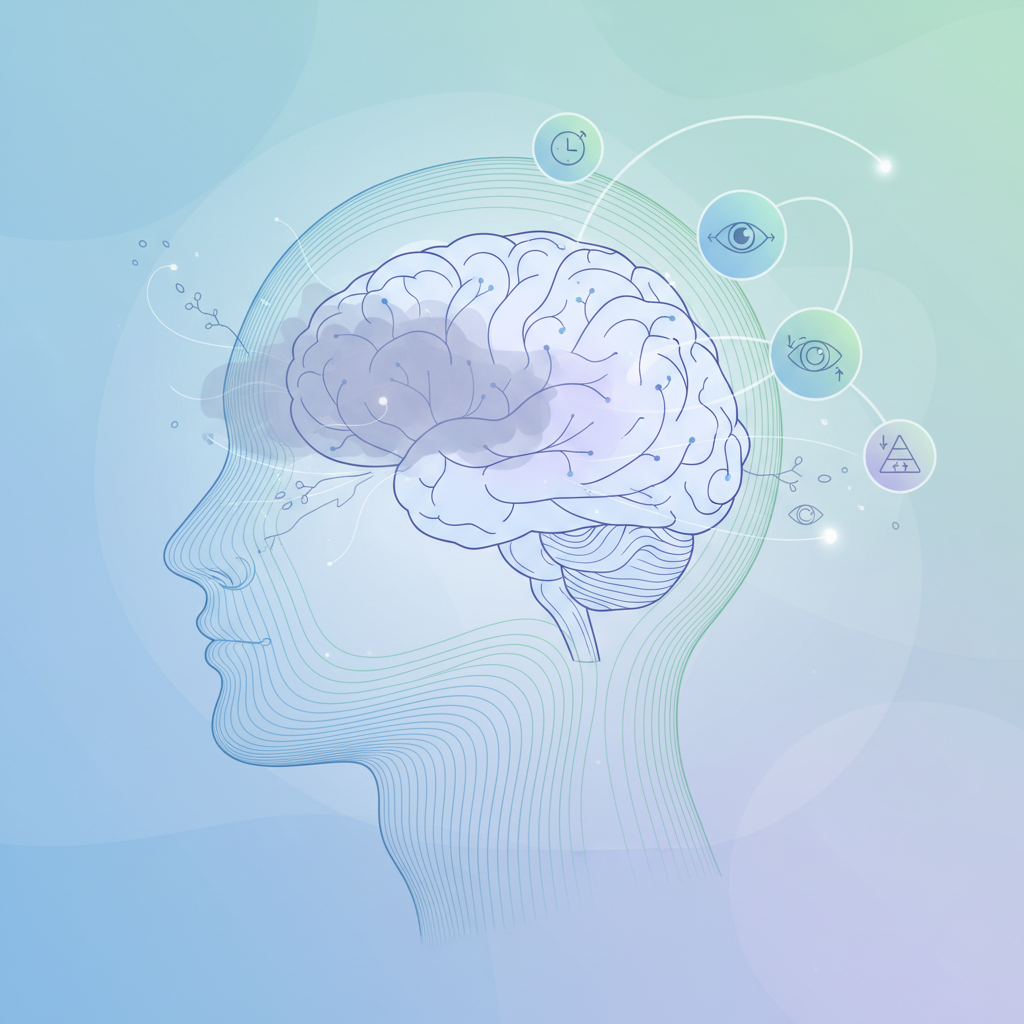
Experiencing brain fog after concussion is a common and often frustrating part of the recovery journey. This post-concussion cognitive dysfunction typically manifests as difficulty concentrating, memory lapses, and a general feeling of mental sluggishness. Frequently, this mental fog is not just a standalone cognitive issue but is deeply intertwined with visual fatigue, as the brain works overtime to process visual information and maintain balance following a head injury.
Can visual strain worsen brain fog after concussion?
Yes, visual strain can significantly worsen brain fog after concussion. Following a head injury, the brain’s processing capacity is often reduced. Because a large portion of the brain is dedicated to visual processing and coordinating eye movements, visual strain can rapidly drain your cognitive reserves.
When your visual system is compromised—leading to issues like eye strain, blurred vision, or difficulty focusing—your brain has to expend extra energy just to see clearly. This robbed energy results in exacerbated cognitive symptoms, leaving you feeling exhausted and increasing your mental fog after concussion. Addressing visual fatigue is therefore a critical step in clearing up cognitive dysfunction.
The Link Between Vision, Balance, and Mental Fog After Concussion
To understand why visual strain impacts cognitive clarity, it helps to look at the vestibular-ocular reflex (VOR). The VOR is a reflex mechanism that stabilizes your vision during head movements. When this reflex is disrupted by a concussion or vestibular disorder, your eyes and inner ear send mismatched signals to the brain.
This mismatch forces the brain to work harder to maintain visual stability and balance. The result is a rapid depletion of cognitive energy, which contributes directly to:
- Difficulty concentrating after concussion
- Increased dizziness and nausea
- Headaches and eye strain
- Heightened mental fatigue
When the visual and vestibular systems are not working in harmony, everyday tasks like reading, scrolling on a phone, or navigating a busy grocery store can trigger severe visual fatigue after concussion and profound brain fog.
Recognizing Visual Fatigue After Concussion
Identifying visual fatigue early is essential for pacing your recovery. Visual fatigue occurs when the visual system is overworked before it has fully healed. Common signs include:
- Eyes that feel tired, sore, or heavy
- Blurred or double vision, especially after reading
- Increased sensitivity to light (photophobia)
- Words appearing to move, float, or blur on a page or screen
- A worsening headache or pressure behind the eyes
- A sudden spike in dizziness or cognitive fogginess during visual tasks
If you notice these symptoms, it is a signal from your brain that you need to reduce your visual load and rest.
How can screen and reading load be paced?
Screen and reading load can be paced by strictly controlling the duration of visual tasks, modifying your environment, and taking frequent structured breaks to stay below the threshold that triggers symptoms. Pacing prevents the “boom-bust” cycle, where you overexert yourself on a good day, leading to a severe crash and worsened brain fog in the days following.
Here is a step-by-step guide to pacing your visual load:
1. Establish your visual baseline Spend a few days tracking how much screen time or reading you can do before your symptoms worsen. This is your visual threshold. Always aim to stop your activity before hitting this limit.
2. Use structured intervals Do not read or use screens continuously until you feel tired. Set a timer for short intervals (e.g., 10 to 15 minutes). When the timer goes off, close your eyes or look at a distant, stationary object for a couple of minutes before deciding if you can continue.
3. Modify your visual environment Make tasks easier for your brain by adjusting the contrast and lighting. Use dark mode on your devices, increase font sizes, and avoid reading in low-light or glaringly bright environments. Audiobooks or text-to-speech functions are excellent ways to absorb information without using your visual system.
4. Implement the 20-20-20 Rule (adapted for concussion) For every 20 minutes of screen time, look at something 20 feet away for 20 seconds. For concussion recovery, you may need to adapt this to 10 minutes of screen time followed by a longer visual break.
5. Track your symptoms daily Use a symptom tracker to log how your eyes and brain feel after specific activities. This data helps you and your healthcare provider understand your triggers and safely progress your visual tolerance over time.
What helps brain fog during concussion recovery?
Managing brain fog requires a whole-body approach that combines symptom management, targeted rehabilitation, and lifestyle modifications.
1. Vestibular and Visual Rehabilitation Working with a physical therapist, vestibular specialist, or using a vestibular-ocular reflex training app can help retrain the brain and eyes to work together efficiently. Specific exercises that help include:
- Gaze Stabilization (VOR x1 and x2): Helps keep vision steady during head movement.
- Saccades and Smooth Pursuits: Improves the speed and accuracy of eye movements.
- Convergence Training: Strengthens the ability of the eyes to work together up close.
2. Prioritize Quality Sleep Sleep is when the brain clears out metabolic waste and heals. Disrupted sleep is heavily linked to mental fog after concussion. Maintain a consistent sleep schedule, keep the room dark and cool, and avoid screens at least one hour before bed to protect your sleep quality.
3. Hydration and Nutrition The brain requires adequate fuel to heal. Dehydration can mimic or worsen cognitive dysfunction. Ensure you are drinking enough water throughout the day and eating regular, balanced meals to maintain steady blood sugar levels.
4. Light Physical Activity Complete physical and cognitive rest is no longer the standard of care for prolonged recovery. Once cleared by a healthcare provider, introducing light, symptom-limited physical activity (like a short walk) can increase blood flow to the brain and help reduce cognitive fatigue.
When to Seek Professional Help
While some degree of visual fatigue and cognitive fogginess is expected in the early stages of recovery, certain red flags require immediate medical attention. According to the Centers for Disease Control and Prevention (CDC), you should seek emergency medical care if your symptoms worsen, or if you experience:
- A headache that gets worse and does not go away
- Weakness, numbness, or decreased coordination
- Repeated vomiting or nausea
- Slurred speech or extreme drowsiness
- Inability to wake up or loss of consciousness
If your brain fog after concussion or visual symptoms do not gradually improve, or if they begin to interfere with your ability to return to work, school, or daily life, consult a vestibular specialist or concussion clinic for a comprehensive evaluation.
Key Takeaways
- Visual strain depletes cognitive energy: Because the brain uses vast amounts of energy to process vision, untreated visual fatigue after concussion will worsen brain fog and make concentrating difficult.
- Pacing is essential: Prevent cognitive crashes by tracking your visual thresholds, taking frequent screen breaks, and modifying your devices (e.g., larger text, dark mode).
- Rehabilitation retrains the brain: Targeted vestibular-ocular exercises, such as gaze stabilization and smooth pursuit training, can help resolve the underlying visual and balance issues draining your cognitive reserves.
- Look out for red flags: Always monitor your symptoms closely and consult a healthcare professional if your cognitive or physical symptoms suddenly worsen.
Start Your Recovery Journey with EyeRehab - VOR Training
Taking an active role in your concussion recovery can make a significant difference in your daily quality of life. EyeRehab - VOR Training is a mobile app designed to guide you through vestibular-ocular reflex training, concussion recovery, and balance rehabilitation from the comfort of your home. With targeted exercises for gaze stabilization, saccades, convergence, and built-in symptom tracking, EyeRehab empowers you to pace your visual load safely and progress your recovery step-by-step. Consult your healthcare provider to see if guided VOR training is right for your recovery plan.
Medical Disclaimer
This article is for informational and educational purposes only and does not constitute medical advice. It is not intended to diagnose, treat, cure, or prevent any disease or health condition. Always seek the advice of your physician or other qualified healthcare provider with any questions you may have regarding a medical condition or before starting any new treatment. If you think you may have a medical emergency, call your doctor, go to the emergency department, or call emergency services immediately.
Frequently Asked Questions
Can visual strain worsen brain fog after concussion?
Use symptom patterns, safety, and day-to-day function to decide the next step. Seek urgent care for danger signs, and ask a qualified clinician for guidance when symptoms are worsening, unsafe, unusual, or not improving.
What helps brain fog during concussion recovery?
Use symptom patterns, safety, and day-to-day function to decide the next step. Seek urgent care for danger signs, and ask a qualified clinician for guidance when symptoms are worsening, unsafe, unusual, or not improving.
How can screen and reading load be paced?
Use symptom patterns, safety, and day-to-day function to decide the next step. Seek urgent care for danger signs, and ask a qualified clinician for guidance when symptoms are worsening, unsafe, unusual, or not improving.
Tags
Written by
EyeRehab - VOR Training Team
Expert insights on vestibular rehabilitation and eye health.
Related Articles
Concussion Symptoms Come Back With Exercise
Explain exercise-related concussion symptom flares, pacing rules, and when symptom return needs reassessment.
EyeRehab - VOR Training Team
July 6, 2026
Blurry Vision After Concussion: Exercises That Help
A practical guide to blurry vision after concussion, including common causes, exercise categories, and when to seek a focused exam.
EyeRehab - VOR Training Team
June 5, 2026
Dizziness After Concussion: What Your Triggers Mean
Use dizziness triggers after concussion to separate vestibular, visual, positional, neck, and exertion patterns, and to ask for safer, more specific rehab guidance.
EyeRehab - VOR Training Team
June 5, 2026