Rééducation vestibulaire à domicile vs kinésithérapie
Comparez la rééducation vestibulaire à domicile et la physiothérapie, en incluant la sécurité, les besoins en évaluation et le soutien via une application guidée par un clinicien.
EyeRehab - VOR Training Team
Publié le 5 juin 2026
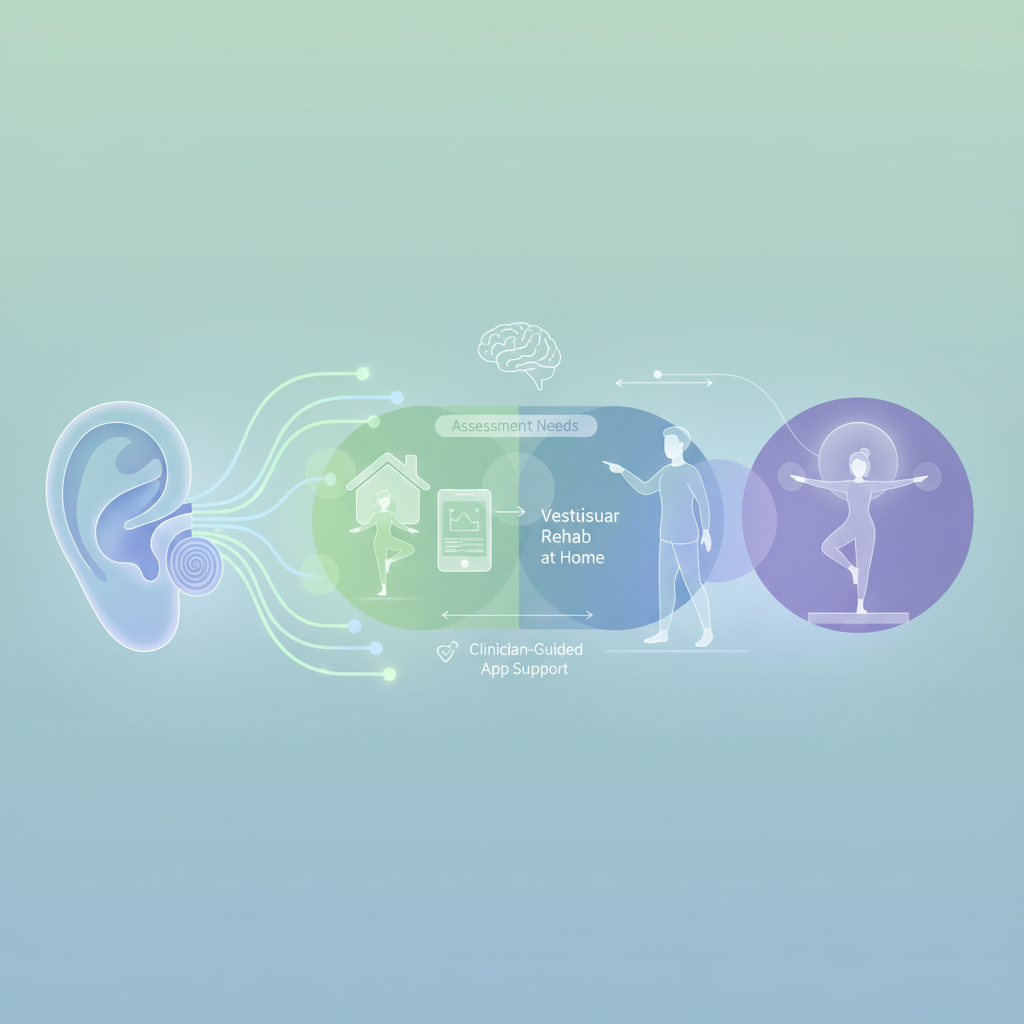
Écouter cet article
Narration Kokoro-MLX · 7 min
Réponse courte
Can vestibular rehab be done at home?
Yes, vestibular rehab can be done at home and is commonly recommended as a core part of recovery for vestibular hypofunction, balance deficits, and post-concussion syndrome. Home-based exercises like gaze stabilization and balance work promote neuroplasticity through daily repetition. However, in-person physical therapy is necessary for initial assessment, ruling out conditions like BPPV, and addressing severe or worsening symptoms. A clinician-guided app can bridge the gap by providing structured exercises, progression, and symptom tracking between clinic visits.
Révisé le 5 juin 2026
Introduction: Navigating Your Recovery Options
Dizziness, visual instability, and balance issues can significantly disrupt your daily life, especially after a concussion or a vestibular disorder diagnosis. When exploring treatment options, patients and clinicians often weigh the benefits of a vestibular rehab app vs physical therapy. Understanding the strengths and limitations of each approach helps you build a safe, effective, and sustainable recovery plan.
Can Vestibular Rehab Be Done at Home?
Yes, vestibular rehab can be done at home. In fact, clinical guidelines frequently recommend home-based exercise programs as a core component of recovery for vestibular hypofunction, balance deficits, and post-concussion syndrome.
Many patients ask, “Can I do vestibular rehab at home?” The answer is a resounding yes, provided your symptoms are stable and you have been cleared by a healthcare provider. Vestibular therapy at home typically involves specific, repetitive exercises designed to promote neuroplasticity—the brain’s ability to adapt and compensate for inner ear or neurological deficits. These exercises often include gaze stabilization (VOR x1 and x2), smooth pursuit training, and static balance work. Doing these exercises daily is critical, as high-frequency repetition is what drives the brain to adapt and reduce symptoms like dizziness and brain fog.
Understanding DIY Vestibular Rehabilitation: The Home-Based Approach
Taking a DIY vestibular rehabilitation approach puts you in control of your daily recovery. Using a specialized app or following a clinician-prescribed home program allows you to perform your exercises in a comfortable environment.
Pros of Home-Based Rehab:
- High Frequency: Recovery relies on consistency. Home exercises allow for daily repetition, which is often more effective than just one or two in-clinic sessions a week.
- Convenience: You can perform your exercises on your own schedule, eliminating travel time and fitting easily into daily routines.
- Symptom Tracking: Using an app for vestibular therapy at home allows you to track daily fluctuations in symptoms like headache, eye strain, and nausea, giving you and your healthcare team objective data on your progress.
- Cost-Effective: Home programs reduce the overall financial burden of extended outpatient care.
Cons of Home-Based Rehab:
- Lack of Hands-On Assessment: Home programs cannot replace the clinical evaluation needed to rule out specific conditions like BPPV (Benign Paroxysmal Positional Vertigo), which requires specific manual maneuvers to treat.
- Risk of Improper Form: Without a clinician in the room, there is a risk of performing exercises incorrectly, which can sometimes temporarily increase symptoms.
- Limited Equipment: Outpatient clinics have specialized equipment for advanced dynamic balance and optokinetic training that may be difficult to replicate at home.
When Is Physical Therapy Needed for Vestibular Issues?
In-person physical therapy is needed when vestibular symptoms are severe, worsening, or accompanied by neurological red flags.
While home exercises are highly effective for chronic compensation and recovery, acute or complex cases require hands-on clinical intervention. You should seek in-person physical therapy or medical care if you experience:
- Sudden, severe, or “room-spinning” vertigo
- Frequent falls or a sudden inability to walk safely
- Double vision (diplopia) or sudden vision loss
- Numbness, tingling, or severe weakness in the face or limbs
- Slurred speech or severe confusion
A vestibular physical therapist is essential for performing differential diagnoses, conducting canalith repositioning maneuvers (like the Epley maneuver) for BPPV, and establishing a safe baseline exercise protocol. Once a clinician ensures you are medically stable and your form is correct, they will often transition you to a home program.
Comparing Options: Vestibular Rehab App vs Physical Therapy
When comparing a vestibular rehab app vs physical therapy, it is important to understand that these two approaches are not mutually exclusive. They serve different, highly complementary roles in a patient’s recovery journey.
- Best for Acute Care & Diagnosis: In-clinic physical therapy is necessary for initial assessments, ruling out red flags, treating mechanical inner ear issues (like BPPV), and establishing a safe baseline for exercise.
- Best for Daily Consistency & Progression: A mobile app is best for maintaining daily exercise habits, progressing difficulty levels safely, and monitoring day-to-day symptom changes.
- Best for Athletes and Return-to-Sport: Athletes often use a hybrid approach. They attend physical therapy for sport-specific testing and clearance, while using an app daily to complete their VOR and convergence protocols.
- Best for Older Adults: Older adults concerned about fall risk may use outpatient therapy for balance assessments, while utilizing seated or standing home exercises in a safe, supported environment to maintain their reflexes.
How Can an App Support Clinician-Guided Care?
A vestibular rehab app supports clinician-guided care by bridging the gap between in-clinic visits, ensuring patients perform their prescribed exercises with correct frequency, progression, and tracking.
Apps act as a digital companion to traditional therapy. When a patient is discharged from in-clinic care, or between therapy sessions, a mobile app provides the structure needed to continue the work independently. For example, the EyeRehab - VOR Training app guides users through evidence-based protocols like Cawthorne-Cooksey training, saccades, and convergence exercises.
By offering built-in difficulty progressions and visual guides, the app ensures the patient is challenging their vestibular system appropriately without overloading it. Furthermore, the symptom tracking features allow patients to log their dizziness, headache, or brain fog after each session. This data is invaluable for physical therapists, who can use it to adjust the patient’s plan of care during follow-up visits.
Key Takeaways
- Yes, you can do vestibular rehab at home: Home-based exercises are an evidence-based, essential part of recovering from concussions and vestibular disorders.
- Physical therapy is for safety and diagnosis: In-person care is vital for acute symptoms, ruling out red flags, and getting hands-on treatments like BPPV maneuvers.
- Apps and PT work best together: Using a vestibular rehab app alongside clinician guidance ensures you get the daily frequency needed for neuroplasticity, alongside the safety and expertise of a professional.
- Consistency is key: Whether you are doing DIY vestibular rehabilitation or working with a specialist, tracking your symptoms and consistently performing gaze stabilization and balance exercises is the pathway to recovery.
Start Your Recovery Journey with EyeRehab - VOR Training
Ready to take control of your dizziness and balance recovery? The EyeRehab - VOR Training app provides structured, progressive exercises right from your mobile device. Whether you need VOR x1/x2 training, smooth pursuit exercises, or static and dynamic balance routines, our app guides you through safe, at-home sessions. Download EyeRehab - VOR Training today to track your symptoms, progress your difficulty, and bridge the gap between your physical therapy sessions.
Disclaimer: This content is for informational and educational purposes only and does not constitute medical advice. Vestibular and concussion symptoms can vary widely and may indicate serious underlying conditions. Always consult with a qualified healthcare professional or vestibular physical therapist before starting any new exercise program, or if your symptoms worsen or change.
Questions fréquentes
Can vestibular rehab be done at home?
Yes. Clinical guidelines support home-based vestibular exercises for stable patients cleared by a healthcare provider. Daily, high-frequency exercises like gaze stabilization and balance training help drive neuroplasticity. However, home programs should not replace clinical evaluation for conditions like BPPV or for patients experiencing severe or worsening symptoms.
When is physical therapy needed?
In-person physical therapy is needed for sudden or severe vertigo, frequent falls, double vision, numbness, weakness, slurred speech, or confusion. A vestibular therapist performs differential diagnosis, canalith repositioning maneuvers like the Epley for BPPV, and establishes a safe exercise baseline before transitioning patients to a home program.
How can an app support clinician-guided care?
A vestibular rehab app supports clinician-guided care by providing structured exercise protocols, built-in difficulty progressions, and daily symptom tracking between clinic visits. This ensures patients maintain the frequency needed for recovery while giving clinicians objective data to adjust treatment plans during follow-up appointments.
Étiquettes
Écrit par
EyeRehab - VOR Training Team
Expert insights on vestibular rehabilitation and eye health.
Articles similaires
PPPD (étourdissement postural-perceptuel persistant) : symptômes, déclencheurs et rééducation
Ce qu'est le PPPD, pourquoi l'étourdissement chronique persiste après la guérison du déclencheur, et comment une rééducation vestibulaire progressive aide à retrouver la stabilité.
EyeRehab - VOR Training Team
1 juillet 2026
Exercices d'équilibre à la marche après une commotion cérébrale
Un guide d'équilibre à la marche post-commotion cérébrale qui associe la démarche, les mouvements de la tête, la charge visuelle et une progression sécurisée.
EyeRehab - VOR Training Team
25 juin 2026
Exercices d'équilibre les yeux fermés : sécurité et progression
Expliquez comment les exercices d'équilibre les yeux fermés modifient la demande sensorielle et comment les faire évoluer en toute sécurité.
EyeRehab - VOR Training Team
20 juin 2026