Concussion Treatment Options: Vestibular vs Vision Therapy
Comparing concussion treatment options? Learn the key differences between vestibular therapy and vision therapy, plus which approach works best for your symptoms.
EyeRehab - VOR Training Team
Published on May 22, 2026
Listen to this article
Natural Language Narration · 10 min
Quick answer
What treatments are available for post concussion syndrome?
Comparing concussion treatment options? Learn the key differences between vestibular therapy and vision therapy, plus which approach works best for your symptoms.
Reviewed on May 22, 2026
Navigating Concussion Treatment Options
Navigating life after a head injury can be overwhelming, especially when symptoms like dizziness, brain fog, and visual instability linger for weeks or months. Understanding the most effective concussion treatment options is the first step toward reclaiming your quality of life. This guide breaks down two of the most effective physical therapies—vestibular therapy and vision therapy—to help you determine the right path for your recovery.
What Treatments Are Available for Post Concussion Syndrome?
Post concussion syndrome treatment typically involves a multidisciplinary approach that targets specific lingering symptoms rather than a single cure-all. According to the CDC, a combination of targeted therapies yields the best outcomes for persistent symptoms.
Available treatments include:
- Vestibular Therapy: Addresses dizziness, balance issues, and motion sensitivity.
- Vision Therapy: Corrects eye-tracking, focusing, and alignment issues.
- Cervical Physiotherapy: Treats neck pain and stiffness contributing to headaches.
- Exertion Therapy: Supervised, gradual cardiovascular exercise to restore exercise tolerance.
- Medication Management: Used to manage severe headaches, sleep disruptions, or mood changes.
What is the Best Treatment for Prolonged Concussion Symptoms?
The best treatment for prolonged concussion symptoms is an active, targeted rehabilitation plan prescribed by a healthcare provider that addresses your specific combination of deficits.
In the past, patients were told to rest in a dark room until symptoms resolved. Modern clinical guidelines from organizations like the Ontario Neurotrauma Foundation strongly recommend against prolonged strict rest. Instead, active rehabilitation is the gold standard. If your symptoms have lasted beyond the expected acute recovery window (typically 10 to 14 days), a thorough assessment by a vestibular specialist, neuro-optometrist, or physical therapist is essential to identify whether your symptoms are driven by the vestibular system, the visual system, or the cervical spine.
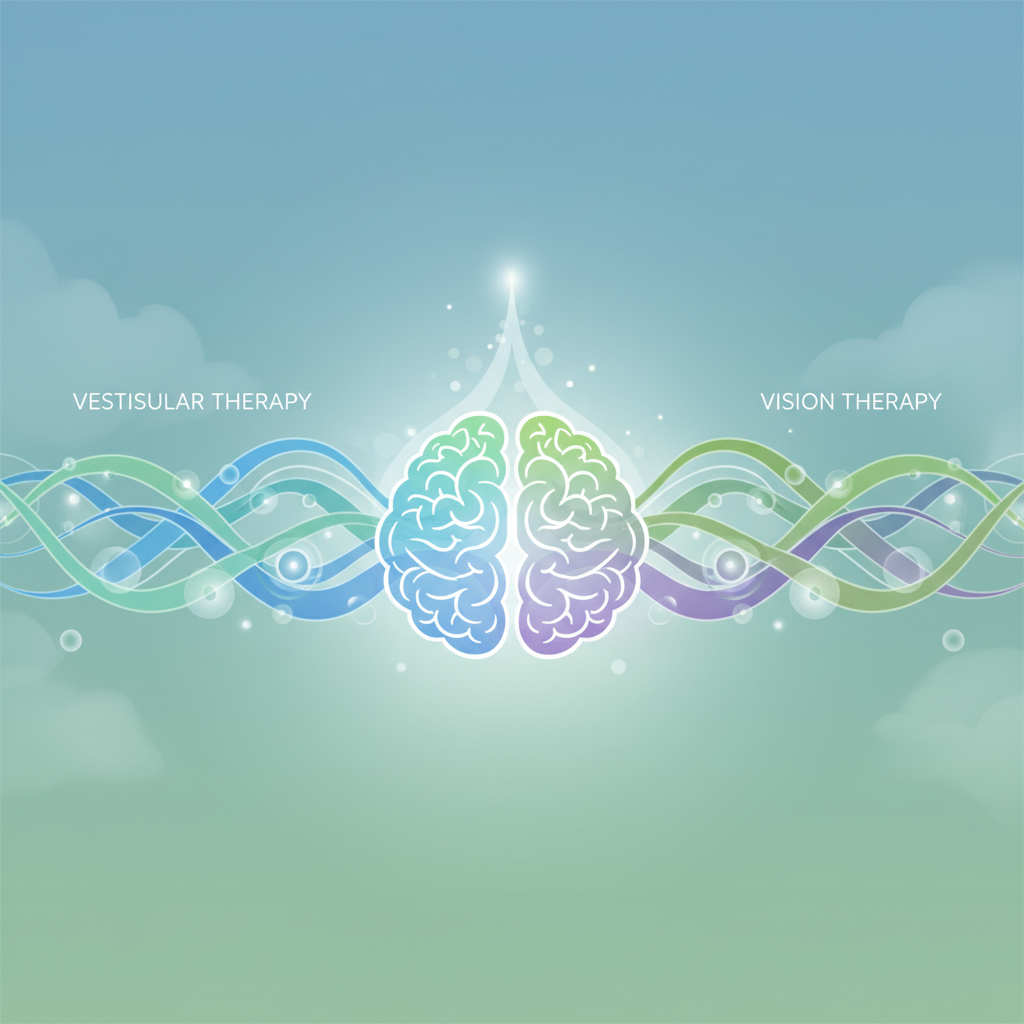
Understanding Concussion Treatment Options: Vestibular vs Vision Therapy
Concussions frequently disrupt the complex communication network between the brain, the inner ear (vestibular system), and the eyes (visual system). Because these systems rely on each other to maintain balance, spatial orientation, and clear vision during movement, an injury to one often affects the others.
While both vestibular and vision therapy aim to retrain the brain and restore normal function, they focus on different anatomical systems and utilize distinct techniques.
Does Vestibular Therapy Help Concussion Recovery?
Yes, vestibular therapy helps concussion recovery by using specific, targeted exercises to retrain the brain to process balance and spatial orientation signals correctly. Clinical practice guidelines strongly support vestibular rehabilitation for individuals experiencing dizziness, vertigo, and imbalance following a head injury.
Vestibular therapy for concussion utilizes several core techniques:
- Gaze Stabilization (VOR Training): Exercises like the Vestibular-Ocular Reflex (VOR) x1 and x2 retrain the eyes to stay focused on a target while the head is moving, significantly reducing the feeling of the world bouncing or blurring.
- Habituation: Controlled, repeated exposure to movements or visual environments that trigger dizziness, helping the brain adapt to these stimuli over time.
- Balance Training: Static and dynamic exercises to improve stability and reduce the risk of falls.
Vestibular Therapy for Concussion: Pros, Cons, and Use Cases
Understanding when to utilize vestibular therapy is key to a successful recovery.
Best Use Cases:
- Patients diagnosed with vestibular disorders like BPPV, vestibular neuritis, or Meniere’s disease.
- Individuals who feel dizzy, lightheaded, or off-balance when moving their head, walking in busy environments, or changing positions.
- Athletes returning to sport who need dynamic balance and gaze stability.
Pros:
- Highly effective at reducing motion sensitivity and dizziness.
- Active, exercise-based approach with measurable milestones.
- Empowers patients to take control of their recovery at home.
Cons:
- Exercises can temporarily increase symptoms like dizziness or nausea during the initial adaptation phase.
- Requires consistent daily practice to trigger brain neuroplasticity.
Vision Therapy for Concussion: Pros, Cons, and Use Cases
Vision therapy focuses on rehabilitating the visual system, specifically how the eyes track, team together, and focus. It addresses visual dysfunctions that often occur after a brain injury.
Best Use Cases:
- Patients experiencing eye strain, blurred vision, or double vision.
- Individuals who struggle with reading, screen time, or sensitivity to light (photophobia).
- Patients diagnosed with convergence insufficiency (difficulty keeping both eyes aligned on a near target).
Pros:
- Directly addresses the visual symptoms that make returning to work or school difficult.
- Incorporates targeted exercises, such as smooth pursuit and saccades training, to improve eye movement accuracy.
- Highly effective when guided by a neuro-optometrist.
Cons:
- Can trigger headaches and severe eye strain if pushed too hard too quickly.
- Often requires specialized equipment or in-clinic visits with a specialized optometrist.
Vision Therapy vs Vestibular Therapy: Which Do You Need?
The distinction between vision therapy vs vestibular therapy often comes down to the primary trigger of your symptoms.
If your symptoms are primarily triggered by movement (e.g., walking, turning your head quickly, riding in a car) and result in dizziness or imbalance, vestibular therapy is likely the most appropriate starting point.
If your symptoms are primarily triggered by visual input (e.g., reading, looking at screens, being in environments with complex patterns or scrolling) and result in eye strain, headaches, or blurred vision, vision therapy is likely the priority.
However, because the vestibular and visual systems are deeply interconnected, many patients require a combination of both. For example, VOR training is a hybrid exercise that uses head movement (vestibular) to maintain clear vision (visual).
Concussion Recovery Strategies You Can Do at Home
Alongside professional guidance, there are several proactive concussion recovery strategies you can implement to support your brain’s healing process.
- Pace Your Activities: Avoid the “boom and bust” cycle. Break tasks into manageable chunks and take rest breaks before your symptoms spike.
- Track Your Symptoms: Use a daily log to track triggers for dizziness, headache, brain fog, and nausea. This data helps your healthcare provider adjust your treatment plan.
- Utilize At-Home Training Tools: Mobile apps like EyeRehab provide guided VOR training, saccades, and convergence exercises that allow you to perform prescribed rehab exercises accurately at home.
- Stay Hydrated and Nourished: Proper nutrition and hydration play a crucial role in brain health and symptom management.
Key Takeaways
- Active Recovery is Best: Prolonged physical and cognitive rest is no longer recommended. The best post concussion syndrome treatment involves targeted, active rehabilitation.
- Target the Deficit: Vestibular therapy treats dizziness, balance, and motion sensitivity. Vision therapy treats eye strain, focusing issues, and tracking difficulties.
- Overlap is Common: The eyes and inner ear work together. It is highly common to need a mix of both vestibular and vision therapy to fully recover.
- Embrace Gradual Exposure: It is normal for rehab exercises to mildly increase symptoms initially, as the brain requires stimulus to rewire itself. Always consult your therapist on appropriate symptom boundaries.
How EyeRehab - VOR Training Can Support Your Recovery
Navigating concussion recovery requires consistent, precise exercises to retrain the brain. The EyeRehab - VOR Training app is designed to bridge the gap between clinical visits and home-based recovery. Whether you are working through vestibular therapy for concussion or focusing on visual stability, the app provides guided VOR x1 and x2 exercises, saccades, smooth pursuit training, and dynamic balance routines. With built-in symptom tracking for dizziness, brain fog, and nausea, you can safely progress your difficulty levels while monitoring your tolerance.
Medical Disclaimer
This content is for informational and educational purposes only and does not constitute medical advice. Concussions and vestibular disorders are serious conditions. Always consult with a qualified healthcare provider, such as a physical therapist, neurologist, or vestibular specialist, before starting any new treatment or exercise program. If you experience severe symptoms, such as worsening headaches, weakness, numbness, or slurred speech, seek emergency medical care immediately.
Frequently Asked Questions
What treatments are available for post concussion syndrome?
Use symptom patterns, safety, and day-to-day function to decide the next step. Seek urgent care for danger signs, and ask a qualified clinician for guidance when symptoms are worsening, unsafe, unusual, or not improving.
Does vestibular therapy help concussion recovery?
Use symptom patterns, safety, and day-to-day function to decide the next step. Seek urgent care for danger signs, and ask a qualified clinician for guidance when symptoms are worsening, unsafe, unusual, or not improving.
What is the best treatment for prolonged concussion symptoms?
Use symptom patterns, safety, and day-to-day function to decide the next step. Seek urgent care for danger signs, and ask a qualified clinician for guidance when symptoms are worsening, unsafe, unusual, or not improving.
Tags
Written by
EyeRehab - VOR Training Team
Expert insights on vestibular rehabilitation and eye health.
Related Articles
Concussion Symptoms Come Back With Exercise
Explain exercise-related concussion symptom flares, pacing rules, and when symptom return needs reassessment.
EyeRehab - VOR Training Team
July 6, 2026
Blurry Vision After Concussion: Exercises That Help
A practical guide to blurry vision after concussion, including common causes, exercise categories, and when to seek a focused exam.
EyeRehab - VOR Training Team
June 5, 2026
Brain Fog After Concussion and Visual Fatigue
Explore how visual fatigue can feed brain fog after concussion and how pacing, eye exercises, and load management can help.
EyeRehab - VOR Training Team
June 5, 2026