My 17-Year Journey with Post-Concussion Dizziness: How I Finally Got My Life Back
A personal story of struggling with dizziness, eye strain, and brain fog after a bike accident—and the vestibular rehabilitation exercises that finally brought relief after years of searching for answers across two continents.
iLyas
Published on January 24, 2026
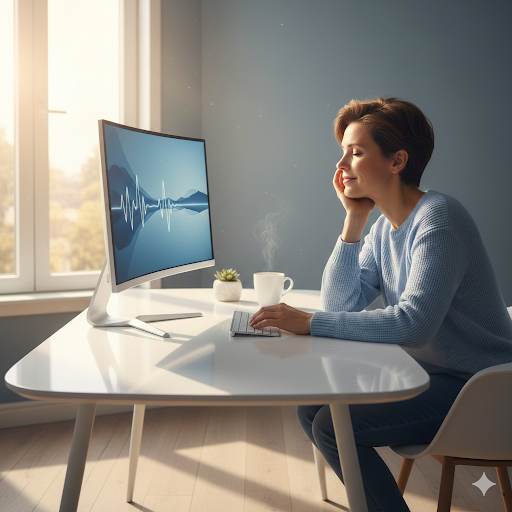
Listen to this article
Natural Language Narration · 9 min
The Accident That Changed Everything
I was 20 years old, living in Paris, and cycling home on a warm spring evening when my life changed in an instant. A car door opened without warning. I swerved, lost control, and hit the pavement hard. My helmet cracked on impact.
The emergency room diagnosed a concussion. Rest for a few weeks, they said. You’ll be fine.
Seventeen years later, I’m finally able to say they were right—but the path to “fine” was far longer and more complicated than anyone predicted.
When the Symptoms Never Fully Left
After the initial recovery, something felt off. The headaches faded, but a strange floating sensation remained. Reading for long periods became difficult. Crowded métro stations in Paris made me feel disoriented and nauseated.
I was young, so I adapted. I told myself everyone got tired after staring at textbooks. I convinced myself the slight dizziness in busy environments was normal. I pushed through.
But as my career progressed and screen time increased, the symptoms became impossible to ignore. By my late twenties, after long days at my desk, the room would gently sway. Scrolling through documents triggered waves of nausea. Video calls left me exhausted for hours. The brain fog was relentless—I’d lose my train of thought mid-sentence, forget why I walked into rooms, and struggle to concentrate on anything.
A Search for Answers Across Two Continents
My journey to find answers spanned France and Canada, countless doctors, and years of frustration.
In Paris, I saw neurologists who ordered scans—all normal. Ophthalmologists who prescribed new glasses that didn’t help. A psychiatrist who suggested it might be anxiety. One doctor told me I was simply working too hard.
When I moved to Montreal in my late twenties, I hoped Canadian healthcare would provide fresh perspectives. I started over: new GP, new specialists, new theories. An ENT examined my ears and found nothing wrong. A neurologist repeated the MRI—still normal. A physiotherapist focused on my neck, thinking it might be cervicogenic dizziness.
None of it worked.
For years, I collected diagnoses that never quite fit: chronic fatigue, tension headaches, computer vision syndrome. I had a drawer full of glasses, prescriptions that didn’t help, and a growing sense that I was somehow making it all up.
The Breakthrough: Finally Understanding VOR
I was 35 when I finally found a vestibular specialist in Montreal who asked the right questions. She didn’t just look at my ears or my eyes—she looked at how they worked together.
Her assessment revealed what years of specialists had missed: my vestibulo-ocular reflex (VOR) was impaired. The concussion seventeen years earlier had disrupted the delicate system that keeps vision stable during head movement. My brain had compensated, but incompletely. And years of intense screen work had made the dysfunction worse.
The diagnosis made sense of everything. The motion sensitivity, the reading difficulties, the way busy visual environments overwhelmed me—it all connected back to that Paris bike accident when I was 20.
The good news? VOR dysfunction can be retrained. The treatment? Vestibular rehabilitation.
What I Wish I’d Known for 17 Years
Looking back, the warning signs were there all along:
- Increasing difficulty following conversations in busy cafés and restaurants
- Feeling “off” after long video calls or virtual meetings
- Motion sickness that hadn’t been there before the accident
- Eye fatigue that no amount of sleep seemed to fix
- A vague sense of being disconnected from my surroundings
- Difficulty reading on the métro or in moving vehicles
I’d normalized all of it. I thought this was just how life felt after a head injury. I thought everyone struggled with screens after working long hours.
I was wrong.
The Turning Point: Starting Vestibular Exercises
At 35, I finally began the rehabilitation I should have started at 20.
The exercises seemed deceptively simple—moving my head while keeping my eyes fixed on a target. But the first session left me dizzy and nauseated for hours.
My therapist in Montreal assured me this was normal. My brain was being challenged to rewire pathways that had been dysfunctional for nearly two decades. That process would be uncomfortable before it got better.
She was right.
Within two weeks, I noticed small improvements. The scrolling dizziness decreased. I could read for longer periods. The brain fog started to lift.
After three months of consistent daily exercises, I felt something I hadn’t experienced since my twenties: normal.
Key Exercises That Made the Difference
My recovery protocol included several types of exercises:
VOR x1 Training
Keeping my eyes fixed on a stationary target while moving my head. This retrained my brain to stabilize vision during movement—the exact reflex damaged in my accident.
Saccadic Eye Movements
Rapidly shifting focus between two targets. This improved my eye coordination and reduced the “swimming” sensation when reading.
Smooth Pursuit Training
Tracking a moving object with my eyes. This helped with following conversations and watching videos without discomfort.
Convergence Exercises
Focusing on objects moving toward my face. This addressed the eye strain I felt during close-up screen work.
Gaze Stabilization
More advanced exercises that challenged my balance while maintaining visual focus. This helped in busy environments like Montreal’s downtown streets.
What Recovery Actually Looks Like
I won’t pretend it was easy. After seventeen years of dysfunction, my brain didn’t rewire overnight. There were days I wanted to quit. Days when the exercises made me feel worse before they made me feel better.
But I kept a symptom journal and tracked my progress. Seeing the data—fewer dizzy days, shorter headaches, improved concentration—kept me motivated when my body wanted to give up.
Six months into my rehabilitation, at age 36:
- I could work a full day without needing to lie down
- The brain fog was 90% gone
- I hadn’t had a scroll-induced dizzy spell in weeks
- Video calls no longer left me exhausted
- I could ride the métro without discomfort
Now, at 37, I finally feel like myself again. Not the person I was immediately after the accident—but the person I should have become if I’d found the right treatment earlier.
You’re Not Alone—And It’s Not Too Late
If my story sounds familiar, I want you to know: this isn’t in your head, and you’re not making it up.
Whether your symptoms started after an accident, a concussion, or simply accumulated over years of screen work, vestibular dysfunction is real and increasingly common—yet still under-recognized. I spent seventeen years and saw doctors on two continents before finding answers.
You don’t have to wait that long.
The symptoms are real. The impact on your life is real. And the solution—vestibular rehabilitation—is evidence-based and accessible.
Take the First Step: Assess Your Symptoms
Not sure if vestibular issues are affecting you? Your symptoms might be more connected than you realize.
Take our free 2-minute symptom assessment quiz to understand what’s happening and discover whether vestibular rehabilitation could help you find relief—just like it finally helped me after seventeen years.
Key Takeaways
- Post-concussion vestibular symptoms can persist for years if untreated
- The vestibulo-ocular reflex can be retrained at any age with targeted exercises
- Screen work can worsen underlying vestibular dysfunction
- Recovery takes time and consistency, but improvement is possible—even after decades
- Early intervention leads to faster results, but it’s never too late to start
- You don’t have to live with dizziness, brain fog, and eye strain
Ready to Start Your Recovery?
The VOR Eye Rehab app provides the same types of exercises that helped me finally recover—personalized to your symptom levels and with progress tracking to keep you motivated.
Whether it’s been seventeen weeks or seventeen years, your brain is capable of healing. Give it the right tools.
Medical Disclaimer: This personal account is for informational purposes only and is not a substitute for professional medical advice. If you’ve experienced a head injury or concussion, always consult with a healthcare provider before starting any rehabilitation program.
Tags
Written by
iLyas
Real stories and expert insights on vestibular rehabilitation.
Related Articles
PPPD (Persistent Postural-Perceptual Dizziness): Symptoms, Triggers, and Rehab
What PPPD is, why chronic dizziness lingers after the trigger has healed, and how graded vestibular rehab helps you get steady again.
EyeRehab - VOR Training Team
July 1, 2026
Walking Balance Exercises After Concussion
A post-concussion walking balance guide that links gait, head movement, visual load, and safe progression.
EyeRehab - VOR Training Team
June 25, 2026
Balance Exercises With Eyes Closed: Safety and Progression
Explain how eyes-closed balance exercises change sensory demand and how to progress them safely.
EyeRehab - VOR Training Team
June 20, 2026