Concussion Recovery Timeline: What to Expect and How to Speed Up Healing
Understand the typical concussion recovery timeline, learn about post-concussion syndrome, and discover evidence-based strategies to optimize your recovery.
VOR Eye Rehab Team
Published on December 10, 2025
Listen to this article
Natural Language Narration · 3 min
Recovering from a concussion can feel like navigating uncharted territory. Every brain injury is unique, and understanding what to expect during recovery can help reduce anxiety and guide your rehabilitation journey.
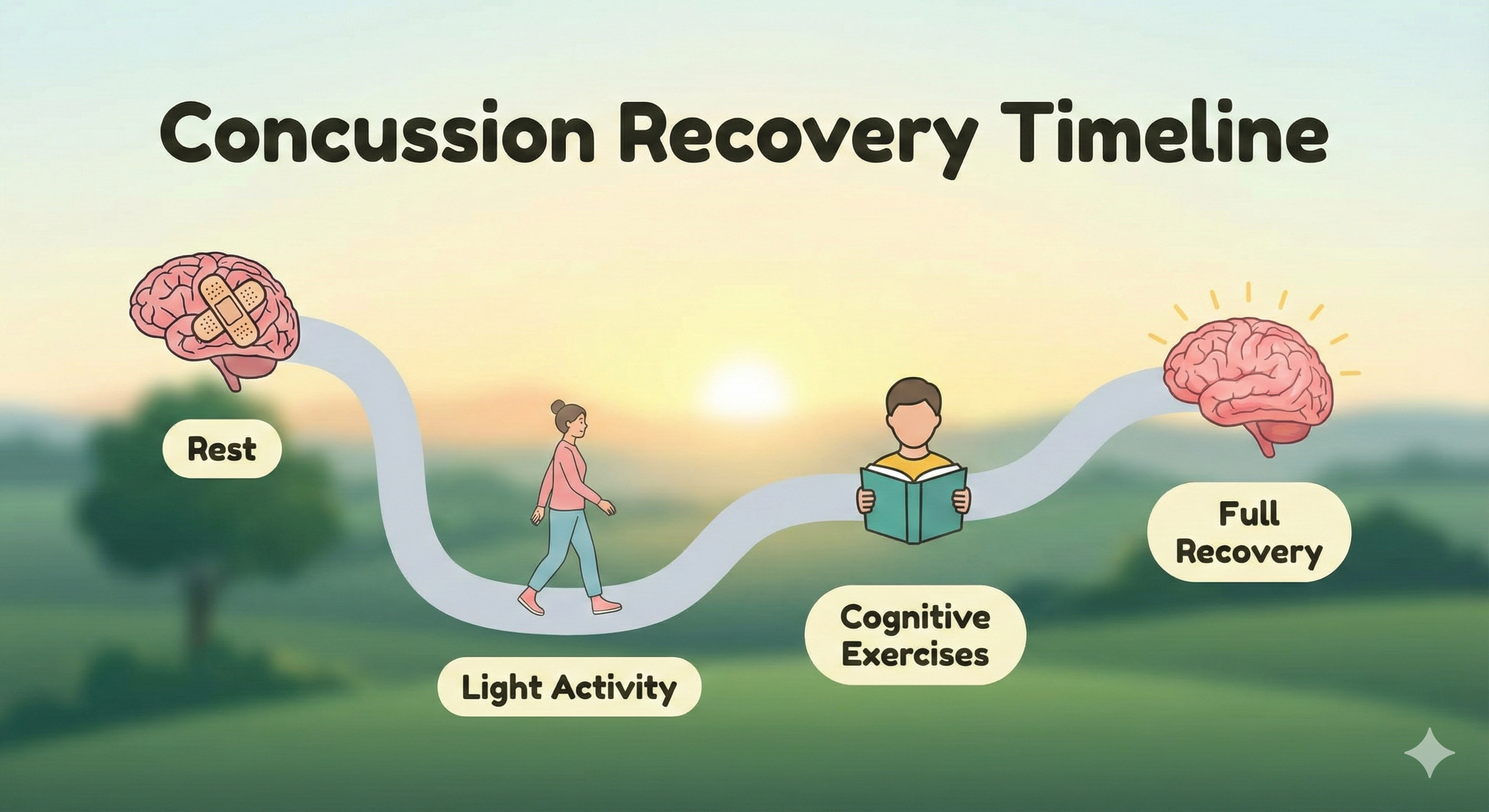
The Typical Concussion Recovery Timeline
Week 1: Acute Phase
The first week after a concussion is critical for rest and symptom management:
- Days 1-3: Complete cognitive and physical rest
- Days 4-7: Gradual return to light activities as tolerated
- Most people experience peak symptoms during this phase
Weeks 2-4: Subacute Phase
During this phase, most people begin to see improvement:
- Gradual increase in activity levels
- Introduction of light aerobic exercise
- Begin vestibular and visual exercises if appropriate
- Many patients return to work/school with accommodations
Weeks 4-12: Recovery Phase
The majority of concussion patients (80-90%) recover within this timeframe:
- Progressive return to normal activities
- Structured rehabilitation exercises
- Gradual return to sports (following protocol)
Understanding Post-Concussion Syndrome
When symptoms persist beyond the typical recovery window, it’s called post-concussion syndrome (PCS). Symptoms may include:
- Persistent headaches
- Dizziness and balance problems
- Visual disturbances
- Cognitive difficulties
- Fatigue
- Sleep disturbances
- Mood changes
Evidence-Based Recovery Strategies
1. Active Rehabilitation
Recent research has shifted away from prolonged rest toward active rehabilitation:
“Prescribed aerobic exercise within the first week after sport-related concussion was associated with a reduced incidence of delayed recovery.” — JAMA Pediatrics, 2019
2. Vestibular Therapy
For patients with dizziness and balance issues:
- VOR exercises improve gaze stability
- Balance training reduces fall risk
- Motion sensitivity exercises decrease symptom triggers
3. Vision Therapy
Visual symptoms are common after concussion:
- Convergence exercises
- Saccade training
- Smooth pursuit exercises
4. Cervical Spine Treatment
The neck is often involved in concussion injuries:
- Manual therapy
- Strengthening exercises
- Postural correction
Red Flags: When to Seek Immediate Help
Contact a healthcare provider immediately if you experience:
- Worsening headache
- Repeated vomiting
- Seizures
- Confusion or disorientation
- Slurred speech
- Weakness or numbness
- Vision changes
Tips for Optimizing Recovery
- Follow your healthcare provider’s guidance
- Gradually increase activity as symptoms allow
- Prioritize sleep — aim for 8-9 hours nightly
- Stay hydrated and eat nutritious foods
- Limit screen time initially
- Avoid alcohol during recovery
- Use tools like the VOR Eye Rehab app for structured exercises
Conclusion
While every concussion recovery is unique, understanding the typical timeline and evidence-based strategies can help you navigate this challenging period. With proper management and rehabilitation, the vast majority of people make a full recovery.
Remember: patience and consistency are key. Your brain is healing, and giving it the right support makes all the difference.
This article is for educational purposes only. Always follow your healthcare provider’s specific recommendations for your individual situation.
Tags
Written by
VOR Eye Rehab Team
Expert insights on vestibular rehabilitation and eye health.
Related Articles

Concussion Symptoms Come Back With Exercise
Explain exercise-related concussion symptom flares, pacing rules, and when symptom return needs reassessment.
EyeRehab - VOR Training Team
July 6, 2026
Blurry Vision After Concussion: Exercises That Help
A practical guide to blurry vision after concussion, including common causes, exercise categories, and when to seek a focused exam.
EyeRehab - VOR Training Team
June 5, 2026
Brain Fog After Concussion and Visual Fatigue
Explore how visual fatigue can feed brain fog after concussion and how pacing, eye exercises, and load management can help.
EyeRehab - VOR Training Team
June 5, 2026