Balance Problems After Concussion: Home Rehab Plan
Understand post-concussion balance problems and a safe home exercise progression for vestibular recovery.
EyeRehab - VOR Training Team
Published on June 5, 2026
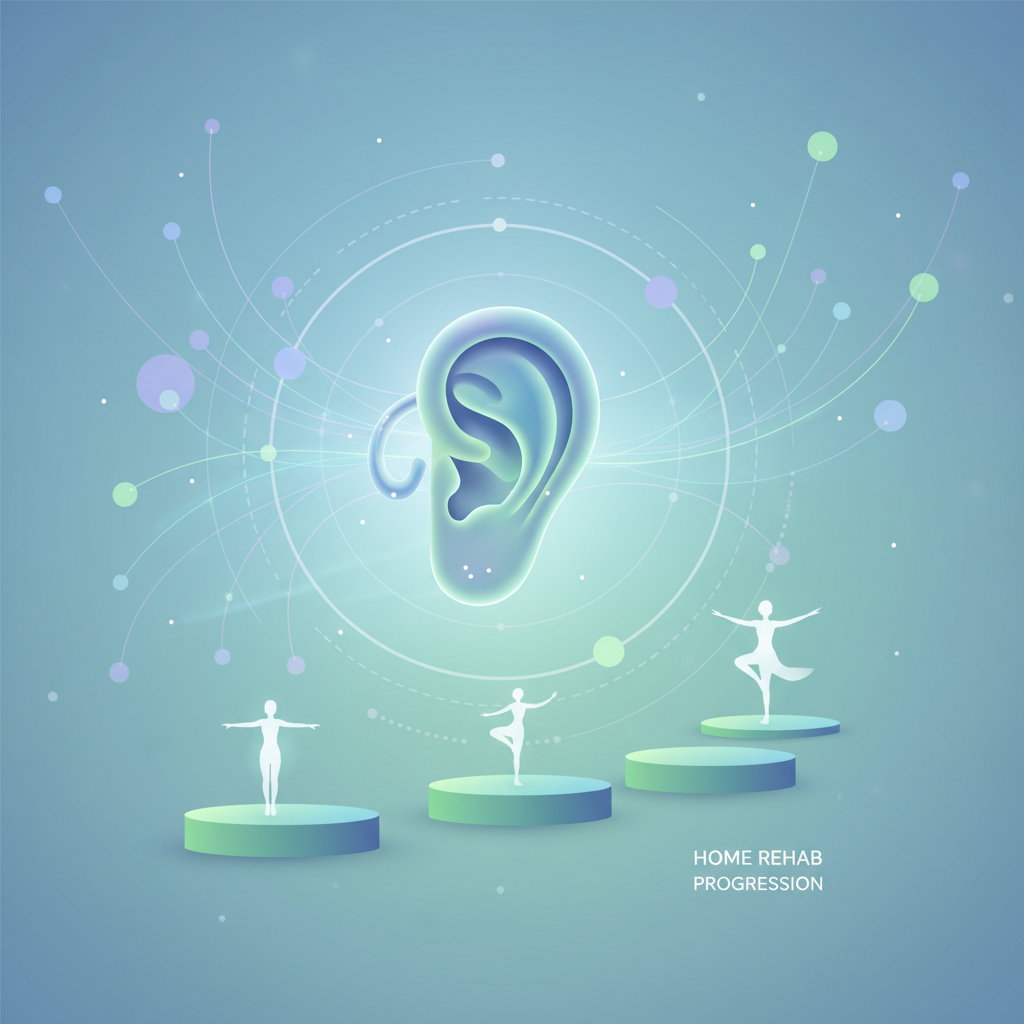
Listen to this article
Natural Language Narration · 8 min
Quick answer
Why do balance problems happen after concussion?
Understand post-concussion balance problems and a safe home exercise progression for vestibular recovery.
Reviewed on June 5, 2026
Why Do Balance Problems Happen After Concussion?
Experiencing dizziness or feeling off balance after head injury is a common and frustrating part of the recovery process. The brain relies on a complex network of sensory inputs to keep you upright, and a traumatic brain injury can disrupt this delicate system. Understanding why these symptoms occur is the first step toward safe, effective rehabilitation.
Balance problems after concussion occur because the brain’s ability to process sensory information from three primary systems is temporarily disrupted:
- The Vestibular System (Inner Ear): Detects head movements and gravity.
- The Visual System (Eyes): Helps the brain understand where the body is in space.
- The Proprioceptive System (Muscles and Joints): Tells the brain what the ground feels like and how the body is positioned.
When these pathways are injured, it leads to vestibular problems post concussion. A key function often affected is the vestibulo-ocular reflex (VOR), which keeps your vision stable when your head moves. When the VOR is impaired, your brain struggles to coordinate head movement with eye movement, leading to dizziness, visual instability, and unsteady walking after concussion.
Recognizing Red Flags: When to Seek Immediate Care
While vestibular rehabilitation exercises are highly effective for recovery, certain symptoms require immediate evaluation by a medical professional. According to the Centers for Disease Control and Prevention (CDC), you should seek emergency medical care if your symptoms worsen, or if you experience:
- Weakness, numbness, or decreased coordination
- Repeated vomiting or nausea
- Slurred speech or extreme drowsiness
- A headache that gets worse and does not go away
Always consult with a healthcare provider or vestibular specialist before beginning any new home rehab plan to ensure it is safe for your specific injury.
What Home Exercises Improve Balance Problems After Concussion?
Specific home exercises that target gaze stabilization, static standing, and dynamic movement can significantly improve balance problems after concussion. The following tutorials focus on retraining the brain and inner ear to work together seamlessly.
Exercise 1: VOR X1 Gaze Stabilization
This exercise retrains the vestibulo-ocular reflex to reduce dizziness when you move your head.
- Setup: Sit upright in a chair in a quiet room. Draw a letter “X” on a post-it note and place it on a blank wall at eye level, about 3 feet away.
- Steps:
- Focus your eyes strictly on the “X”.
- Turn your head to the left as if shaking your head “no,” while keeping the “X” in sharp focus.
- Turn your head to the right, continuing to focus on the “X”.
- Move at a moderate, steady pace.
- Progression: Start by sitting down. Once that is easy, try performing the exercise while standing. Later, you can progress to doing this while walking or standing on a soft surface.
- Common Mistakes: Moving the eyes instead of the head, or moving the head too fast which causes the target to blur.
- Pro Tip: If you experience nausea or dizziness, slow your head movement down. It is better to move slowly without symptoms than to push through a flare-up.
Exercise 2: Static Balance Training
This exercise challenges your proprioceptive and vestibular systems to improve your baseline stability.
- Setup: Stand in a corner or near a sturdy counter so you can catch yourself if you lose balance.
- Steps:
- Stand with your feet close together, arms crossed over your chest.
- Maintain your balance for 30 to 60 seconds.
- Rest, and repeat 3 to 5 times.
- Progression:
- Level 1: Feet together, eyes open.
- Level 2: Feet together, eyes closed. (Safety is paramount—stay near a wall!)
- Level 3: Semi-tandem stance (heel of one foot touching the big toe of the other foot).
- Level 4: Standing on a soft surface, like a firm pillow or a piece of foam.
- Common Mistakes: Looking down at the floor. Your brain relies heavily on vision for balance; looking down alters your head position and throws off your inner ear sensors.
- Pro Tip: Keep your gaze fixed on a single, stationary point straight ahead at eye level.
Exercise 3: Dynamic Walking with Head Turns
This exercise retrains your brain to maintain balance while you are moving, addressing unsteady walking after concussion.
- Setup: Find a clear, open hallway or a long room free of tripping hazards.
- Steps:
- Walk forward at a normal, comfortable pace.
- While walking, smoothly turn your head to the left and then to the right, as if you are looking at store windows as you pass by.
- Keep your eyes focused forward in the direction you are turning your head.
- Walk for 20 to 30 feet, then rest.
- Progression: Try walking backward or sideways. Eventually, you can try walking while looking up and down, or walking on a softer surface.
- Common Mistakes: Walking too fast, or moving the head too quickly which triggers severe vertigo.
- Pro Tip: Have a friend or family member spot you the first few times you try this exercise to prevent falls.
How Should Balance Exercises Progress Safely?
Balance exercises should progress safely by systematically increasing the physical and sensory demands of the task while closely monitoring symptom levels. According to clinical practice guidelines for vestibular rehabilitation, recovery relies on neuroplasticity—the brain’s ability to rewire itself through repeated exposure.
This requires finding the “sweet spot” of exercise: you want to provoke mild symptoms (a 2 or 3 out of 10 on a dizziness scale) to trigger brain adaptation, but you should avoid pushing so hard that your symptoms spike severely. If an exercise causes a sharp increase in dizziness, headache, or brain fog that does not settle down within 20 to 30 minutes, you have pushed too far.
If you are experiencing balance issues months after concussion, it is especially important to pace yourself and progress gradually. A standard, safe progression looks like this:
- Position: Move from seated exercises to standing exercises, and finally to dynamic (walking) exercises.
- Surface: Transition from hard, flat floors to thick carpets, and eventually to foam pads or uneven grass.
- Vision: Begin with your eyes wide open, staring at a fixed target, and gradually progress to exercises with your eyes closed.
- Distractions: Start in a quiet room and eventually work your way up to busy environments with moving lights and background noise.
Key Takeaways
- Balance problems after concussion stem from a sensory mismatch between the inner ear, eyes, and the brain.
- Retraining the vestibular-ocular reflex (VOR) and practicing static/dynamic balance are highly effective ways to reduce dizziness.
- Home exercises must be progressed gradually based on symptom tolerance, moving from seated and stable positions to dynamic and unstable environments.
- Always prioritize safety by practicing near walls, avoiding exercise during severe symptom spikes, and consulting a healthcare provider.
Take Control of Your Recovery with EyeRehab - VOR Training
Navigating a concussion recovery plan can feel overwhelming, but you do not have to do it alone. The EyeRehab - VOR Training app provides a comprehensive, guided platform designed to help you safely rehab from the comfort of your home. With built-in VOR x1 and x2 exercises, saccade training, and static and dynamic balance protocols, the app automatically progresses difficulty right when your brain is ready. It also features a built-in symptom tracker so you can monitor your dizziness, headache, and brain fog over time. Download EyeRehab today to take the guesswork out of your vestibular recovery.
Medical Disclaimer
This content is for informational and educational purposes only and does not constitute medical advice. Concussions and vestibular disorders are serious medical conditions. Always consult with a qualified healthcare professional, such as a physical therapist or neurologist, before starting any new exercise program, and seek immediate medical attention if your symptoms worsen.
Frequently Asked Questions
Why do balance problems happen after concussion?
Use symptom patterns, safety, and day-to-day function to decide the next step. Seek urgent care for danger signs, and ask a qualified clinician for guidance when symptoms are worsening, unsafe, unusual, or not improving.
What home exercises improve post-concussion balance?
Use symptom patterns, safety, and day-to-day function to decide the next step. Seek urgent care for danger signs, and ask a qualified clinician for guidance when symptoms are worsening, unsafe, unusual, or not improving.
How should balance exercises progress safely?
Use symptom patterns, safety, and day-to-day function to decide the next step. Seek urgent care for danger signs, and ask a qualified clinician for guidance when symptoms are worsening, unsafe, unusual, or not improving.
Tags
Written by
EyeRehab - VOR Training Team
Expert insights on vestibular rehabilitation and eye health.
Related Articles
PPPD (Persistent Postural-Perceptual Dizziness): Symptoms, Triggers, and Rehab
What PPPD is, why chronic dizziness lingers after the trigger has healed, and how graded vestibular rehab helps you get steady again.
EyeRehab - VOR Training Team
July 1, 2026
Walking Balance Exercises After Concussion
A post-concussion walking balance guide that links gait, head movement, visual load, and safe progression.
EyeRehab - VOR Training Team
June 25, 2026
Balance Exercises With Eyes Closed: Safety and Progression
Explain how eyes-closed balance exercises change sensory demand and how to progress them safely.
EyeRehab - VOR Training Team
June 20, 2026